
RADICALLY SLOW
A conversation with Betta A. on her latest collaboration with Brian Eno
Interview by Krysti Joméi & Jonny DeStefano
Published Issue 147, March 2026
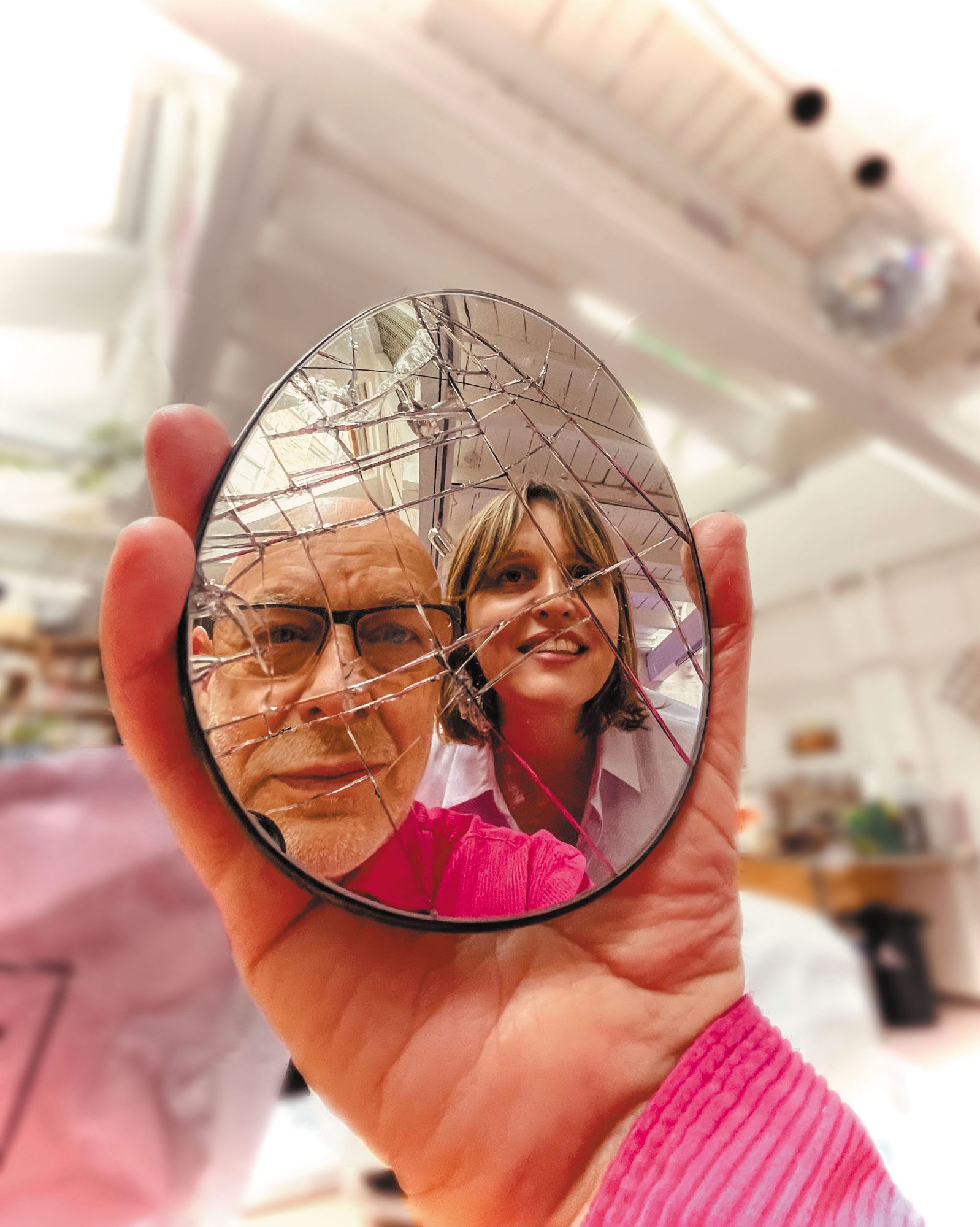
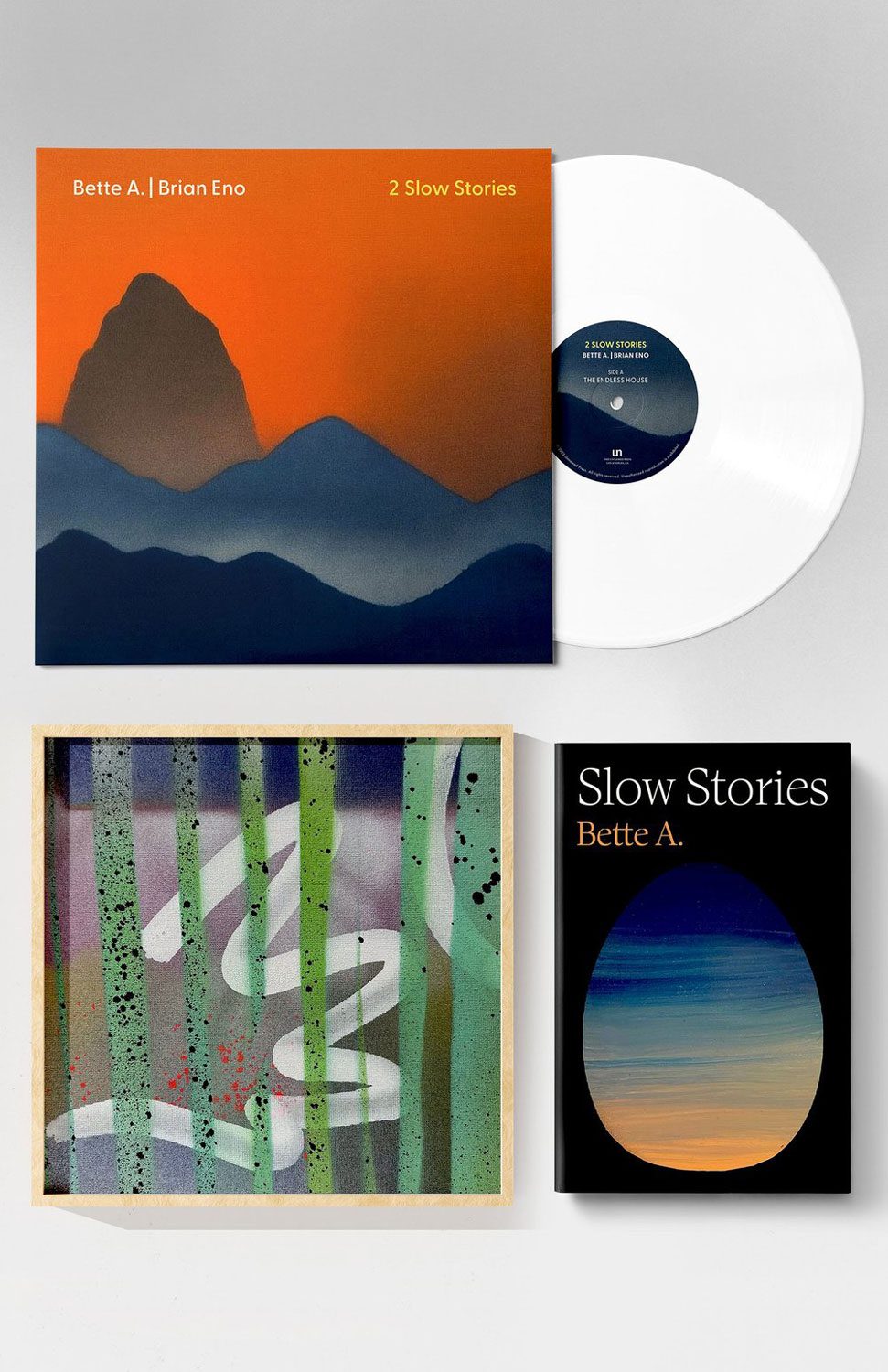
Slow Stories by Dutch author Bette A. is a collection of short stories that mutated across two decades. Written, rewritten, and pared back over time, the stories shed plot and excess, becoming shorter, stranger and more distilled. Two of them expanded beyond the book into Slow Stories: A Collaboration of Storytelling, Music, and Art, Bette’s latest multimedia co-creation with artist and musician Brian Eno.
Each limited edition bundle serves as both a portable gallery and music box. With a hardcover book, a vinyl recording of two stories — The Endless House and The Other Village narrated by Bette and scored by Brian — and a one-of-a-kind signed painting created by both artists, there’s a total of 444 available. Proceeds go to the Heroines! Movement, a global storytelling collective centering around women role models, co-founded by Bette, and Earth/Percent, a charity channeling funds from the music industry to organizations that do the most impactful work around the climate emergency, co-founded by Brian.
We connected with Bette who was in Amsterdam, bringing our worlds together with a conversation that moved at its own pace, unfolding with the same openness and attention of the project itself.
Birdy: You and Brian put out the book, What Art Does: An Unfinished Theory, last year. And now, Slow Stories, a multi-faceted creation that’s so symbiotic and organic-feeling. How did this project come about?
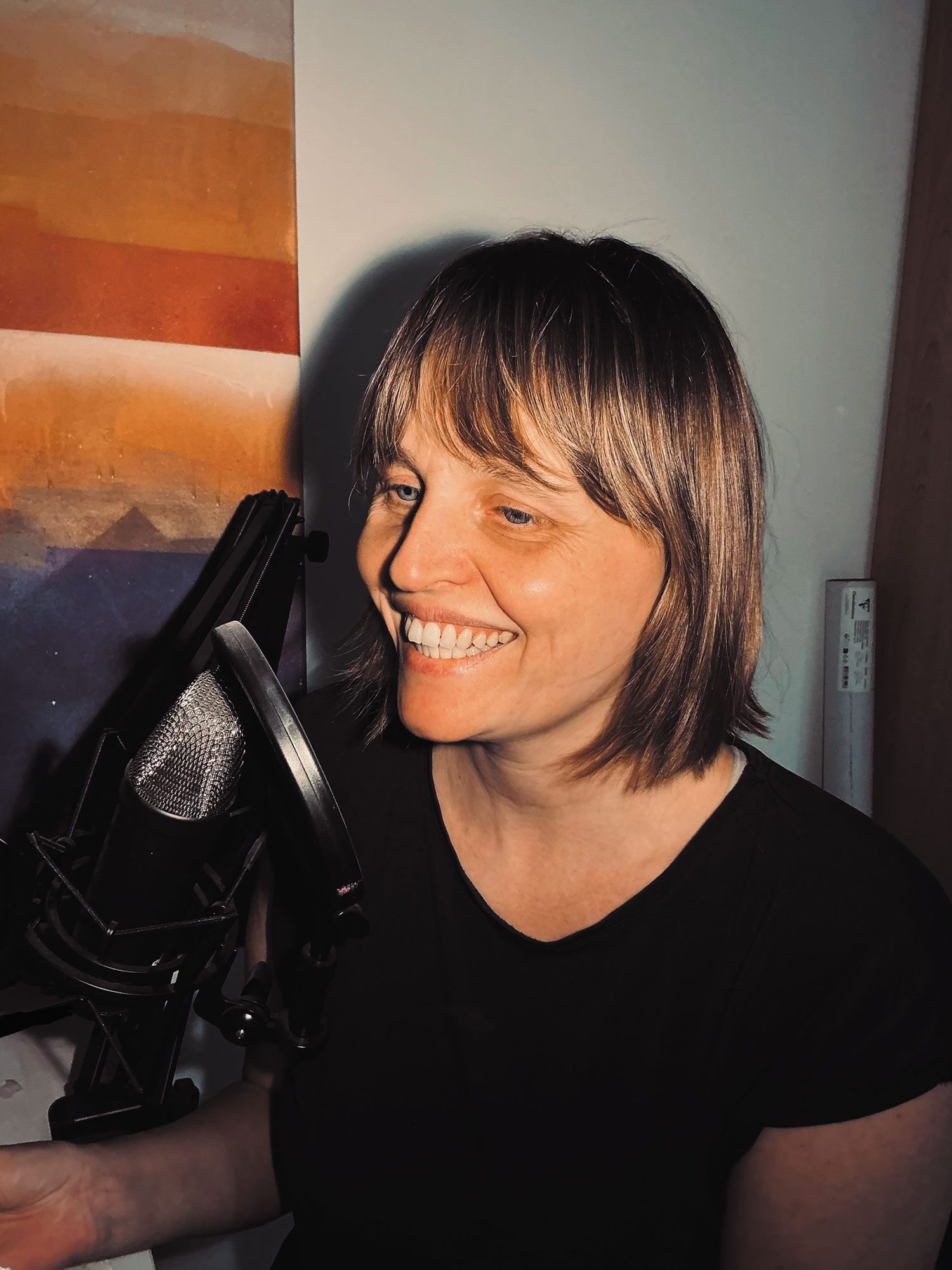
Bette A: We have a very similar approach to making art, which is not very goal-oriented, it’s very process-oriented, we’re very much in the moment, and just having fun and not really thinking where it’s heading. We were working on What Art Does, which is about the theory of making art, and I said, “My publisher would like me to record some stories to music.” And a minute later, we were in the studio. I never thought we would use my voice because I have a Dutch accent. He said, “Just try it. Record it.” And he kept saying, “Go slower, read slower.” At some point I was reading at an incredibly slow pace, just half a minute between sentences. The first sentence in the first story is: “A girl was born in a village in a desert.” And Brian wanted me to read: “A … … … girl … … … was … … … born … … … ”
Birdy: Wow.
Bette A: So that was very new for me. We put his music to it and started experimenting with different tracks and audio. And I realized it’s really doing something to the story. Where normally you’re so plot-oriented when you’re reading, you want to know what is the next thing, where is it going? But if you linger on, “A girl was born …” and then you get one minute of Brian’s beautiful music to kind of rest your brain on that, the sentence just unfolds like a flower. You get all these associations, visual imagery. So we immediately thought, Oh, this feels right. This is what we want to do.
Birdy: I love that. Creating anything meaningful should be like play, but it’s also beautiful that you challenged yourself with recording your voice being a writer for decades. I can only imagine how different of a process that must have been.
Bette A: Absolutely. It’s the realization you can rely on the listener or the reader very much to ignite their own imagination. I’ve never liked adjectives and elaborate descriptions. I just like to say, “There was a forest.” What I’ve learned from this process is that when you give your listener a lot of time, they will generate an entire forest in their minds and it’s enjoyable. And Brian’s music really helps with that. Poets are very comfortable leaving a lot of white space on the page. And we fiction writers always want to get to the thing that’s happening. So it gave me a lot of confidence in giving the sentences an enormous amount of space and working with Brian helped me a lot too because he is very minimalist.
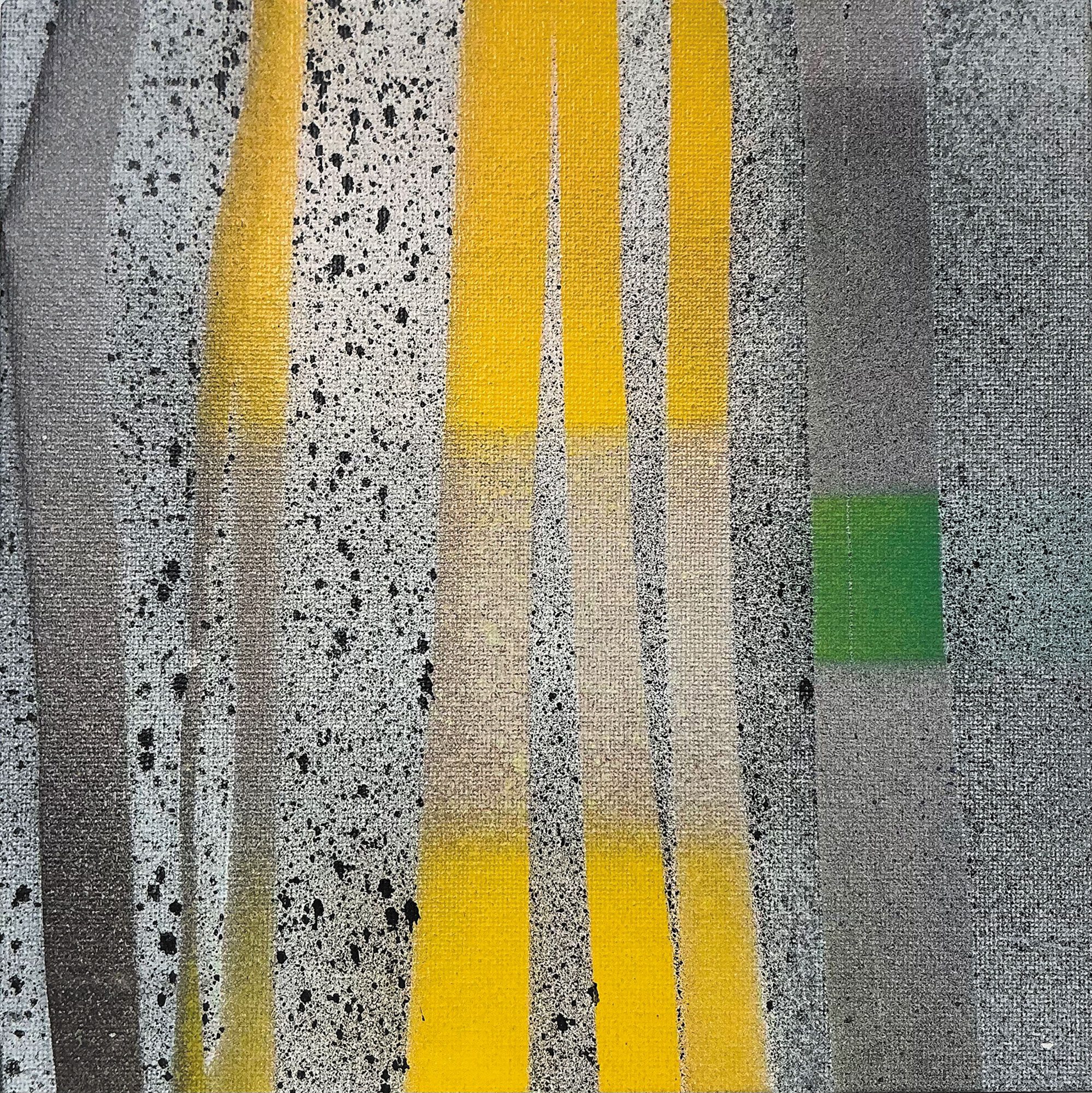
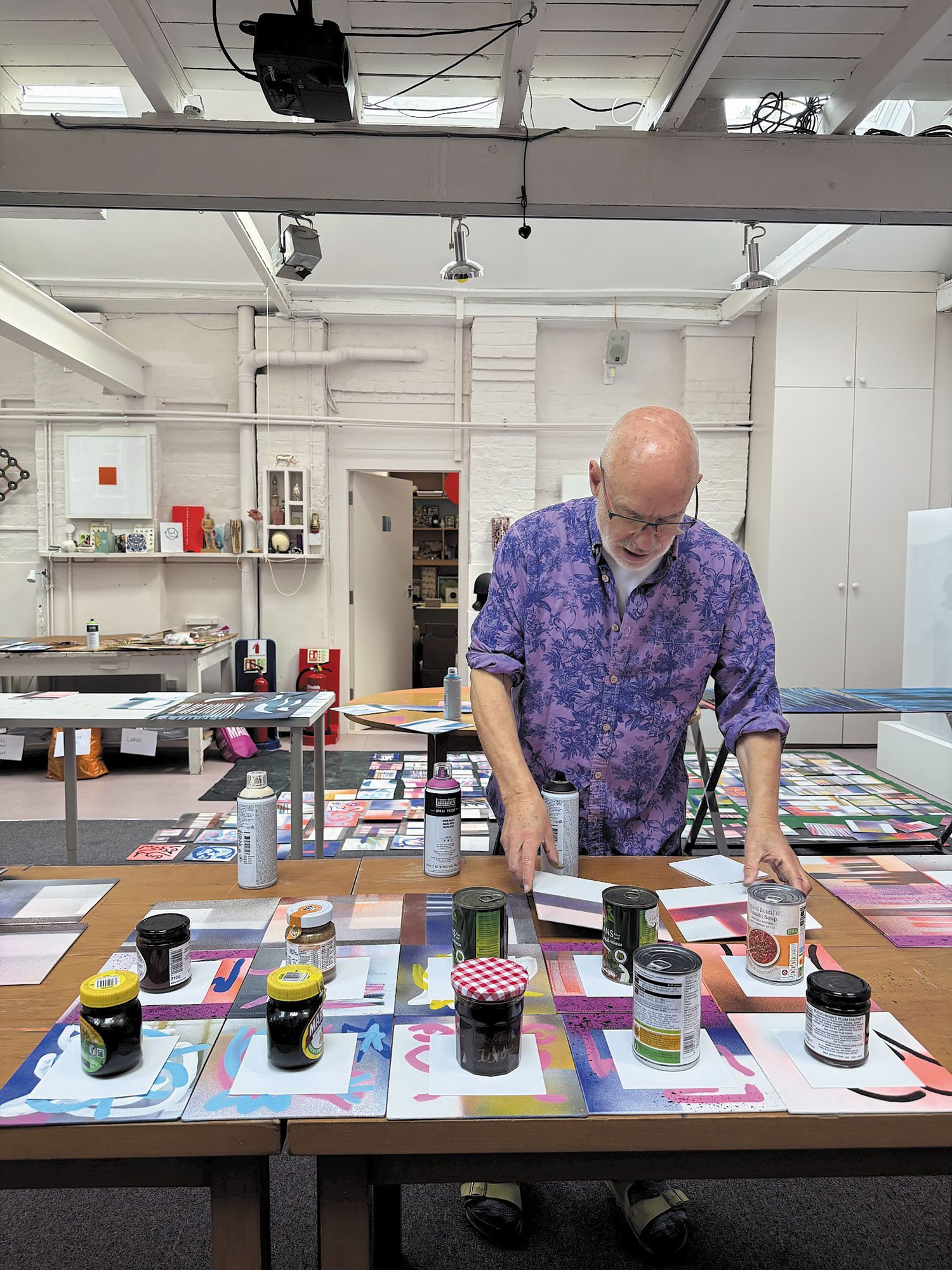
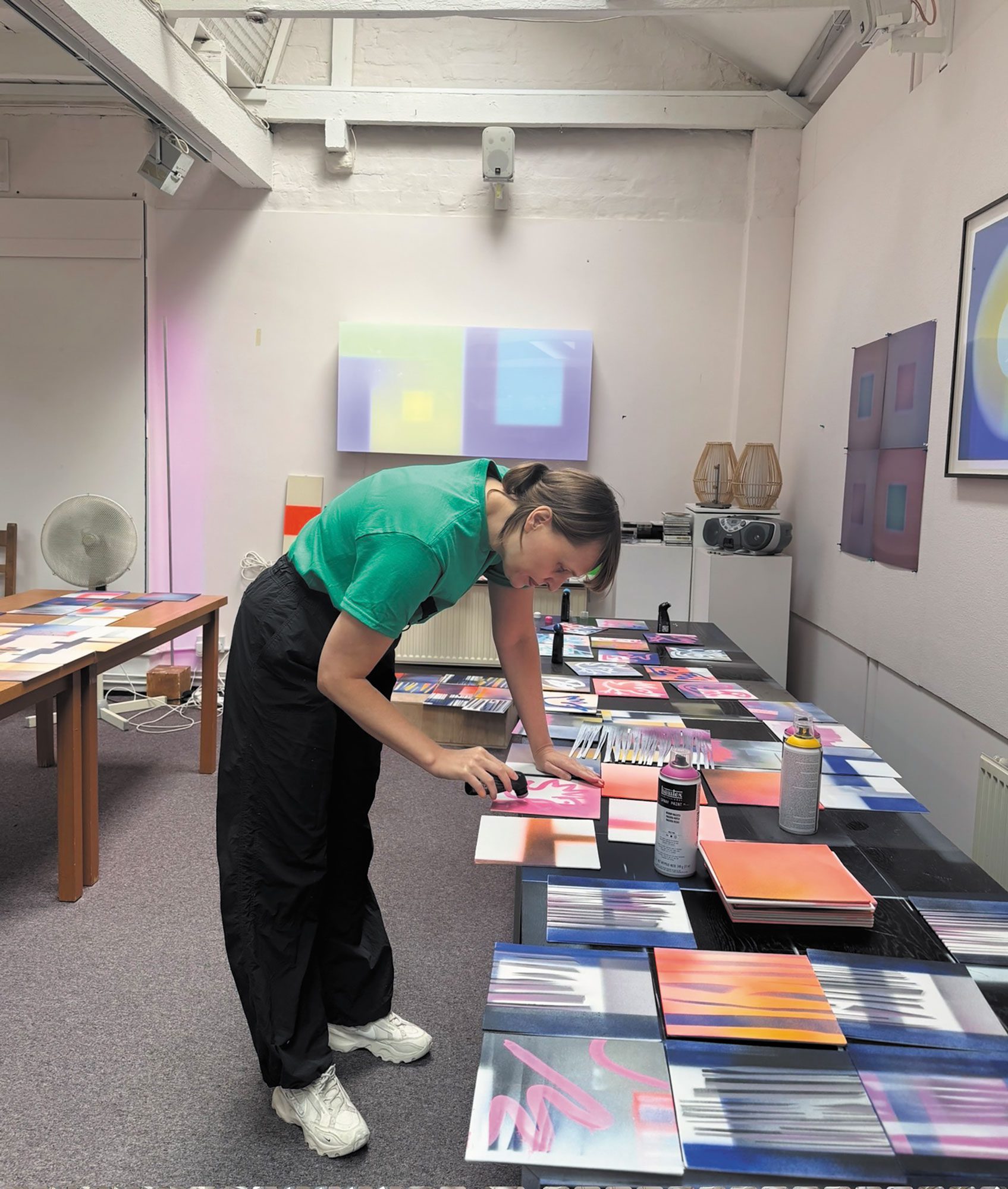
We also made paintings together and he’ll paint a couple of lines and say, “Oh, this is great,” and I think, It’s just the beginning. But it’s because I have this preconceived notion that everything has to be elaborate and take a certain amount of time. Well actually, sometimes simple is a great place to sort of hang the hat of your attention on and then let your imagination do the work. So that’s what I learned from Brian, to pair down a bit, keep it minimal and trust more in the listener or the reader that they want to do some work as well.
Birdy: We feel the same way. We don’t want to insult the intelligence of our readers. We are intentionally image-driven and often ambiguous as we assume that people are willing to dive in and make their own interpretations. It is a balance though, because you want it to be great, but you’ve got to let go and just trust that what you’re doing is going to be understood.
Bette A: It comes sometimes from insecurity to want to do more work and elaborate more and tinker with it some more. It takes confidence to say, “This is it,” and create a really nice invitation for people to engage with it.
Birdy: It also takes confidence to sit in stillness and slowness and not go-go-go all the time. We have this fear of falling behind in life or never being ahead enough. And I think that it’s so crucial for us to have space to just be.
Bette A: That’s how we feel. We hope these are stories that help you slow down, the music helps you slow down. And you take 30 minutes for something that would take eight minutes if you read it on the page at a normal pace. It’s very unnatural for people of our day and age to take three times as much time than is needed for something. So we hope that this trains the imagination muscle and trains the capacity for slowing down, which our society is completely geared at us forgetting. We lose that skill because everything wants our attention all the time and people want to know, “Where do you see yourself in five years, in 10 years?” We ask children, “What do you want to be when you grow up?” It’s always something ahead, something in the distance. Even in our Western world when we meditate, we meditate for a purpose. And we might even take a picture of it and post it on Instagram. It’s commodifying this thing that is part of our human nature which is just be. But it’s hard.
Brian and I were just talking about this yesterday that we get approached by interviewers as if we are the gurus of slowing down. But we both struggle with it. Brian said, “If I’m on the train, I put my phone away to look out the window and then a minute later, without realizing, I’m looking at it again and I’m completely the same. So I need these oases in my life that remind me to slow down.”
Birdy: We’ve always been really attached to the connection of analog formats, because we remember a time when the phone wasn’t hijacking our existence, our amygdalas. So what you two are doing is really important work in bringing the pendulum back to having some semblance of sanity with how we relate to the world and ourselves.
Bette A: Well, it’s similar to what you’re doing. Just go make something physical that isn’t slick and sleek but interesting and maybe slightly challenging and fun and different each time, perhaps hard to summarize. That is radical at this moment. I think physical objects like a physical book or a magazine, putting on a record, you cannot really multitask. You have to consciously choose this moment: I will engage with this. Even the turning of the pages will slow you down a little bit. That’s why I think the physicality of things also helps us to return into our bodies into the now and not just always in our minds to the next thing.
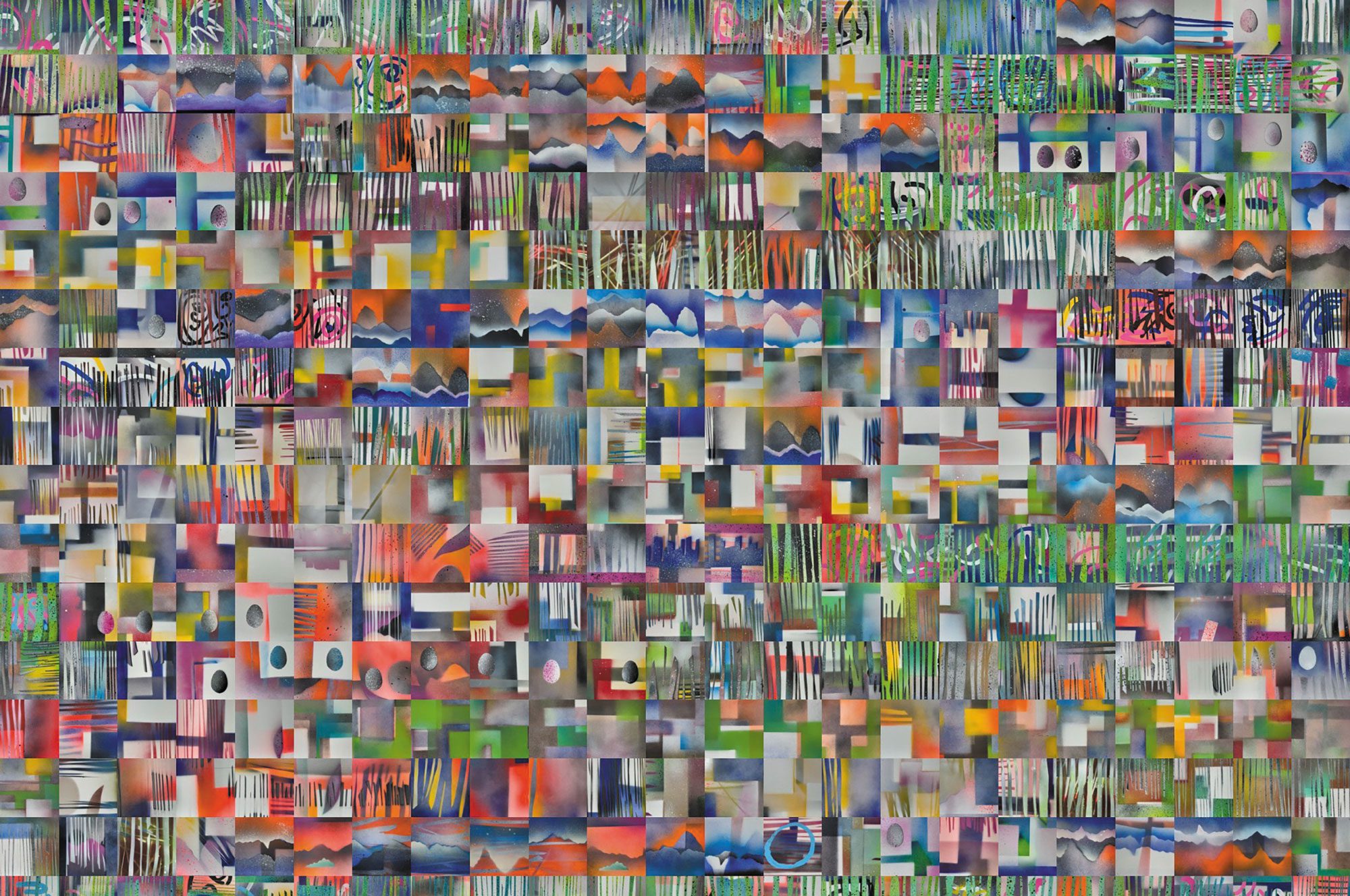
We made this record and we also made paintings. We’re selling it as a bundle to raise funds for our charities [Heroines! Movement and Earth/Percent]. The fact that we made a painting is so confusing to some people. They said, “You shouldn’t do that because you need a clear story and you need to just make a record.” Brian immediately said, “I like it when it’s complicated. People can handle complicated, can handle a story that’s slightly unusual and isn’t totally simplified with a nice pink ribbon around it.”
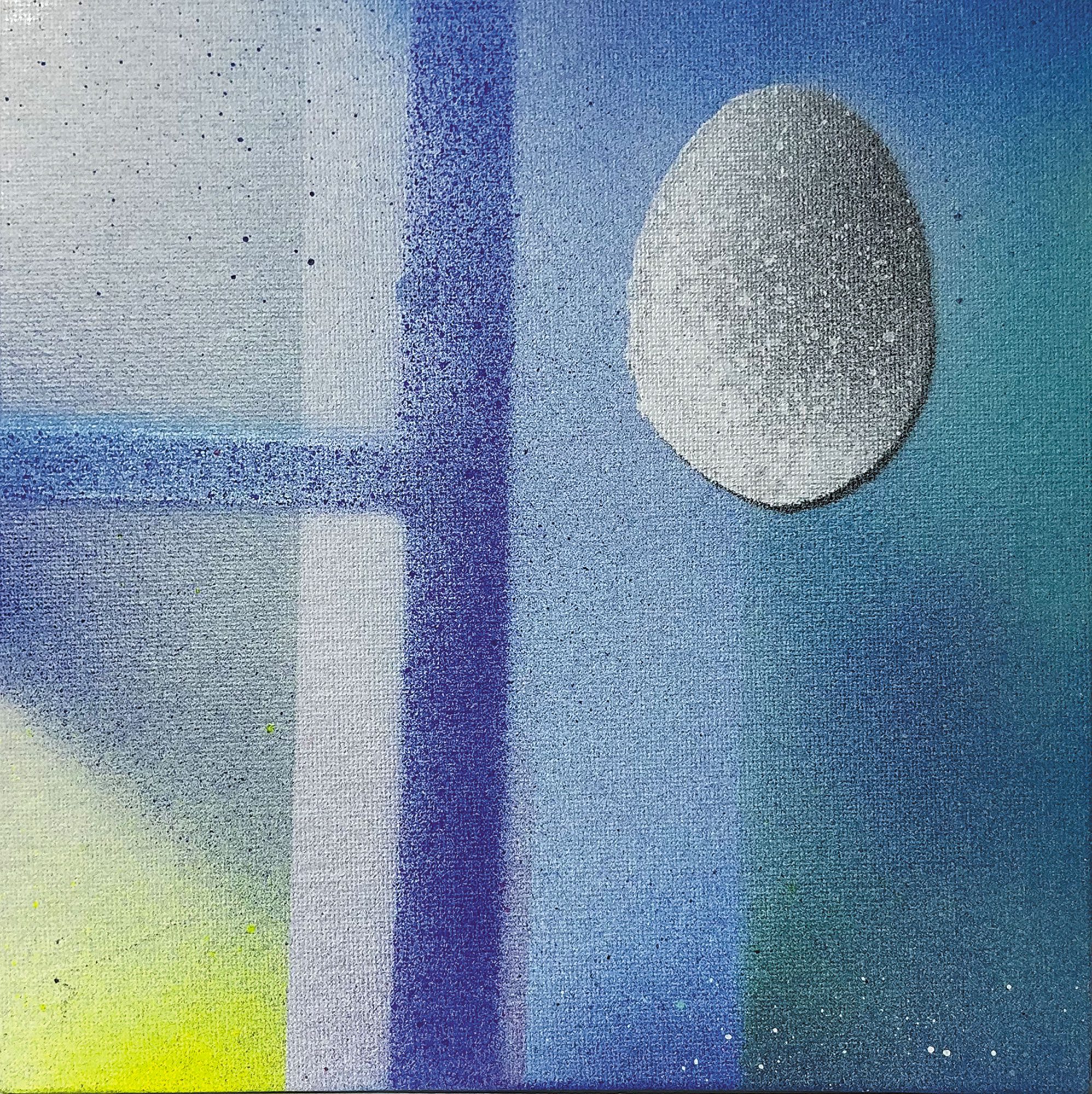
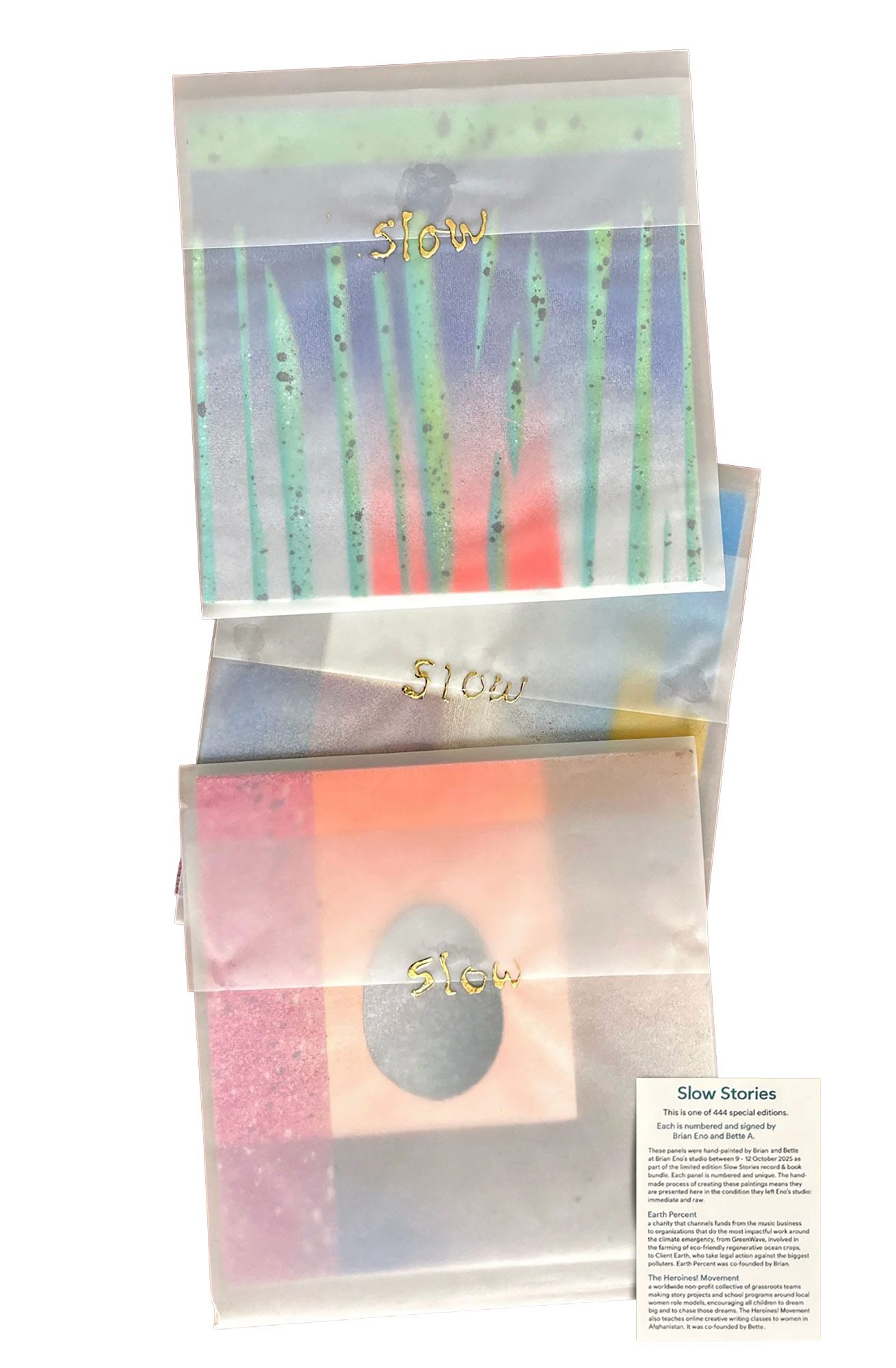
Birdy: It’s funny because when I first saw your paintings I thought, This makes absolute sense! Even the way you packaged them by hand with a handwritten “slow” in gold. And the visuals, the abstract images, they’re like representations of the sonic elements, the stories, the music, your voice. If you’re holding a piece of art while listening to the album, it helps you expand your mind even further, to think about the story, through those colors and and patterns, they’re like environments. Super immersive.
Bette A: I’m very glad to hear it. I think sometimes that’s the thing with art. It very often intuitively makes sense and then the story comes much later and the story can even mutate. It’s just feels right and not overthinking is something that I really try to do and just release it, put it out there and see if other people also like it.
Birdy: It’s so special that each painting is going to be a unique gift to people, they’re not mass-produced. People are craving slow media. They’re craving getting together in community. They’re craving realness.
Bette A: I like things that are flawed. And that’s why I felt comfortable using my for voice for this record because Brian said, “I love accents.” And I had a little bit of a cold and he said, “Well, that will make you more human. You don’t sound like an AI, you sound like a human being.” And that’s what I like about the paintings as well. They’re all individual. Somebody made them, made the envelope. It was not the most efficient way to do it. So, it’s very human. When we get together in person, there’s friction, there’s flaws, there’s awkwardness. Sometimes we don’t get each other. But that is life. And I think so many people are starting to realize we don’t need everything to be so smooth and frictionless or to be able to duplicate it with a perfect narrative. We just want to feel good, to feel alive. That’s what I’ve been practicing in my work.
And I like what you said about gathering. I’ve also started something that we’re now raising funds for, which is an online school for women in Afghanistan. It’s part of the Heroins! Movement. I teach there with an Afghan poet [Somaia Ramish], and she talked about women in Afghanistan who are now banned from doing any art, it’s a crime. They’re banned from raising their voice outside of the house, for gathering. We were having a conversation about it and some people said, “It’s hopeless. There’s nothing we can do.” And Somaia said, “There is something you can do. You can interact with them. They’re not dead. They’re online. You can teach them and you can have meaningful moments. And maybe that won’t lead to gender equality in Afghanistan, or maybe it won’t liberate them, but we forget that the moment also counts.”
So we did this beautiful exhibition with art school students in Amsterdam who went into a digital exchange with the women in Afghanistan to create the exhibition together. Again people said, “But what will this achieve? This won’t get rid of the Taliban.” No, but it was an amazing experience for everyone involved. And some of the Afghan women said, “We wouldn’t survive without art, it keeps us afloat.” Again, this appreciation of not result-oriented things, but things that are in the here and now, they also have value. Just a nice talk with somebody, laughing with your neighbor, it is an actual thing.
Birdy: Yes! And you never know how you’re going to affect someone. A simple smile or a wave has made me nearly burst into tears of relief on a hard day. We have these grand notions of wanting to make a huge changes, especially as creatives. But like you said, it’s the small shifts that often have the most impact.
Bette A: Yeah, I think so. And we do see results in the sense that these women are seeking out these things because they are developing themselves and they’re in ongoing resistance. I think this corporate way of always looking at — What will be the outcome? How can we scale it up? — is something that has infected all of us. Like you said, a meaningful moment can be huge and you cannot always see the outcome.
About 20 years ago, I was standing outside at a red light and it started raining really hard, that rain where immediately your underwear is soaked. And then I looked at this man who was standing next to me who was holding a suitcase on his way to work. And we just started laughing together, just at the weirdness of the moment of both of us getting soaked to the bone. I think about this moment a lot. What did it achieve? What does it mean? What it’s about? I don’t know. But I still think about it.
Birdy: I love that glimmer of humanity. And what you’re doing with the Afghan women. It’s like you’re giving a hug through the the screen, a breath of hope. So they know that what they’re thinking or dreaming of is actually happening in other parts of the world and can be attained, and that they don’t have to buy the narrative of their oppression.
Bette A: I’m also learning a lot. I thought it would be hard but it’s an enrichment of my life. The students are of such a high level. Nobody has their camera on, they’re all anonymous. I just pictured my regular 20-year-old students and then after I got to know them, it turned out that one is in her late 30s and a master chess player who use to be a math teacher. So I thought, Oh, that’s why I don’t feel like I’m teaching. I feel we’re just working together because they’re so talented. And I’m learning about the use and power of art through it, how we can connect. An Afghan fairy tale can form a bridge between different worlds. How can you ever plan for that? The person who came up with it likely didn’t think, Oh, 300 years from now this is going to … That’s how we make art. We don’t know. We make it because we like it. And maybe other people will like it. And maybe 20 years from now, people will still like it. Or maybe it’s just your grandma who likes it, or pretends to like it.
Birdy: It’s like Nietzsche’s quote: “Art is the proper task of life.” I’m under the impression that everybody is an artist.
Bette A: Beautiful.
Birdy: I think it’s innately human. It’s a birthright. It’s ancient. It’s tied into our DNA. But people will say, “No, I’m not an artist.” My siblings and I are very creative. But my parents claim not to be artists. But my dad would write random poetry, or strum a guitar, or my mom would take us on these creative adventures or give us prompts for writing. They are artists! They don’t see it. And it actually breaks my heart. It’s important for us to explore our innate creativity, and also to not compare ourselves to others’ art. And that’s what I get from your project.
Bette A: That’s the thing that Brian and I connected over. We both feel really strongly that there is no difference between your dad writing fun poems or your mom taking you out on adventures outside or my grandma thinking for half an hour which wool she wants to pick for the pillow. There’s no difference between that and the people who make operas and paintings and the so-called “high art.” It just has a different skill level, a different appreciation level, but it’s completely the same. People don’t feel included when the conversation is about art, but it’s about all of us. We all do art all the time.
I think our education system drops the ball where we don’t explain to kids what art is for. It’s our self-expression. It’s enjoyable in the moment. It’s a way to engage with our feelings. That’s why when kids hit age 9 or 10, which they call “the rational age” in developmental psychology. They want to know: What is it for? They have to learn to read to learn more, to ride their bike so they can get to school. I’s unclear what art is for. So then they start judging it by the wrong standards — Am I the best singer in my class? Will I stand on a stage later in life and will people clap? Are my drawings photo realistic? And you hear people when they’re 40 or 50 say, “Oh, I loved singing, but I stopped. I don’t know why.” Nobody tells you what it was for. It was for you! You enjoyed it, and that was enough. Art is useful for the purpose of engaging with your feelings and it can sometimes be really clear to you and sometimes it can be a mystery.
Birdy: And we don’t always need the answers! I think that’s the bane of our existence in this form of life as we know it — always trying to figure shit out and sometimes shit is not meant to be figured out.
Bette A: Just enjoy that moment of mystique. When I wrote the stories on the record, The Endless House and on the other side, The Other Village, I sent The Other Village to a few people. My sister who’s a scientist got back to me and she said, “This is about science. This story is a critique on science.” And I was kind of baffled by this. Another friend got back to me and said, “You wrote this story as a warning for me that I shouldn’t fall in love with someone else, and if I do, I shouldn’t explore it.” And my publisher said, “This story is about Trump’s America.” And so three really different interpretations, but apparently the story had enough room for people to engage with it and actually feel like it was about something. So I think that some art can be a great vessel for your feelings and create a container for you to see it more clearly, and there we have to cherish that ambiguity and mystique and possibility. Yes, I could also write a non-fiction essay, but I write these stories so then you can put yourself in it if I do it well. I like that art leaves room for this mutating truth.
Birdy: Maybe I’m just a total weirdo, but these stories you wrote, these otherworldly fantastical worlds that couldn’t happen in reality on these records, I feel they are more of a reality than what we’re living in currently. Like these spaces you create make more sense to the core of being a human than the facade of being bombarded with constant advertisement and news and noise.
Bette A: It’s why I write. I feel like the narrative of the place you’re in or the narrative that’s put on you by the media can become so dominant that you don’t really see the clear picture anymore. Right now in our Western world, in the past week, all of us have had one thought about Donald Trump, about Melania, about maybe Kim Kardashian, because it’s been put in our minds. The speed that this is coming at us is really high and it’s all alarming, and to detach from it is so hard. When you’re in an office environment or in any kind of environment, the narrative of that place also becomes your narrative, and can pollute your experience of reality. It’s very hard to stay within that core of yourself.
Ever since I was a young child, I wrote stories. If I was confused by something or I had a lot of feelings, I turned all the characters in the event into animals. And it was a way of getting rid of all the rubbish and getting closer to a core of what was happening. So in that sense I agree with you that it feels truer. I personally like stories that get rid of all those details and go into the core of those feelings that we have and the way we relate to each other. What does it mean to be among others? What does it mean to fear others? How can you protect yourself and still be open? Those are the kind of questions that occupy my mind. And that’s not saying that we shouldn’t read the news. I mean, we need to know what’s going on. I use stories to get somewhere without all the clutter in my brain.
Birdy: There’s a quote from one of my favorite musicians, Trent Reznor: “Art is resistance.” Intentionality, slowness, as you say, is radical. It’s an act of rebellion.
Bette A: I love that. I think slowing down is dangerous now because it will remind you of what actually matters to you. You’re actually not afraid of immigrants. They never really hurt your life in any way for most people. What if you slow down? What are you afraid of? What is giving you that unease? Diving deeper is dangerous for the people who want to control the narrative because then we figure out it’s actually other things that bother us. And I think that’s why art now feels almost like resistance and like a radical act, because art allows you to think your own thoughts, to feel your own feelings.
Limited copies of Slow Stories: A Collaboration of Storytelling, Music, and Art are available through Unnamed Press.
See more work from Bette A. on her website | Learn more about her charity: Heroines! Movement.
Check out Brian Eno’s other projects on his website | Learn more about his charity: Earth/Percent.