
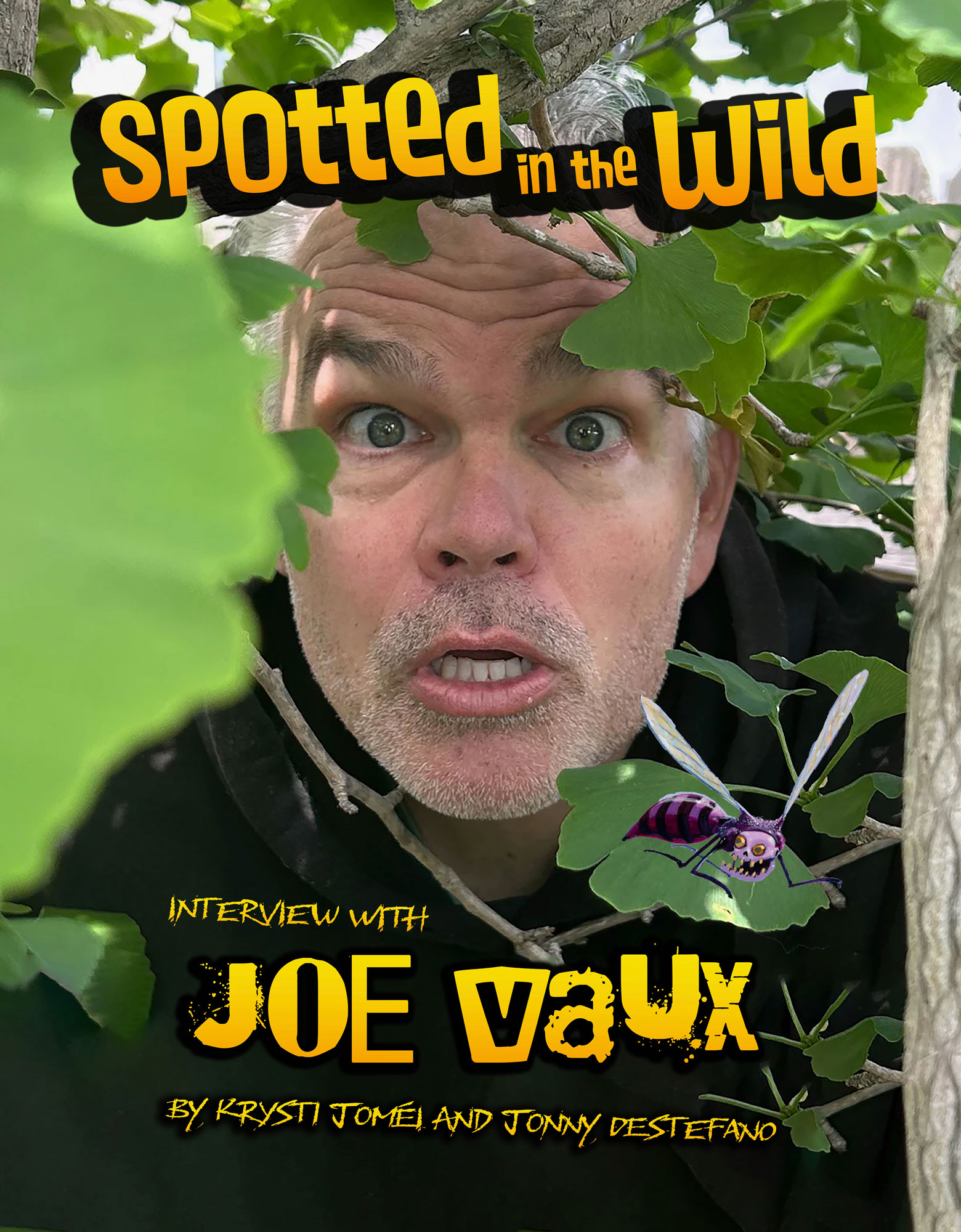
Published Issue 150, July 2026
Some sightings stay with you. Joe Vaux is one of them. From directing the animated sitcom Family Guy to creating imaginative, creature-filled paintings from his California home studio, Joe’s work lives somewhere between the familiar and the fantastical. Equal parts keen observer and art-scientist, Joe has carved out a creative life where humor, heart and a reverence for the wild intertwine, inviting us to step inside and take a closer look.
Spend a little time with him and it becomes clear that the line between imagination and reality was never meant to be all that solid. Monsters are misunderstood. Sharks are the heroes. UFOs drift through the night like curious insects. Even the darkest corners of his paintings seem to hold a strange kind of optimism, as if every beast is simply asking to be seen a little differently.
This month his imagination continues to unfold with Signals From Elsewhere, a group show at Mortal Machine Gallery in New Orleans, followed by his upcoming solo exhibition, Bug Off, opening this September at Brassworks Gallery in Portland.
We wandered through childhood, creativity, animation, his connection to nature, and the quiet discipline it takes to keep showing up for your imagination and the things that matter most. By the end of our conversation, it became clear that Joe isn’t just creating new worlds. He’s reminding us to take a look at this one with a little more curiosity, compassion and of course, fun.
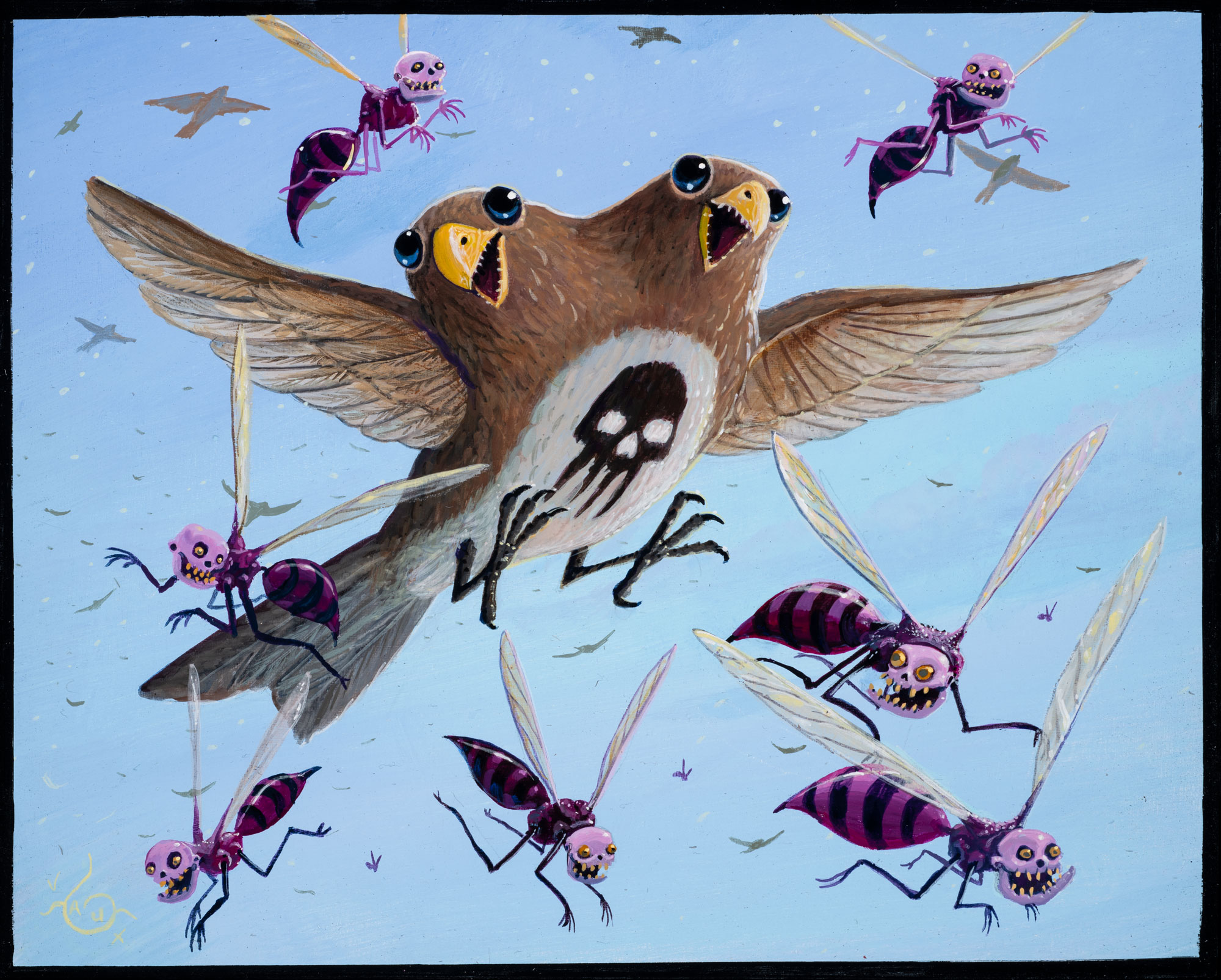
Joe Vaux: What’s up, you two? Just playing with some filters. You want to look glamorous too?
Birdy: That’s actually a really pretty look for you, Joe. Beautiful.
Joe Vaux: I wish. These things always crack me up. We used them when we played Dungeons & Dragons all through COVID.
Birdy: Were you the DM?
Joe Vaux: No, no. I don’t have those kind of skills. I just love playing. I’ve dabbled with it since I was a kid.
Birdy: Definitely a lot of fond memories.
Joe Vaux: It was just late nights and junk food and fights.
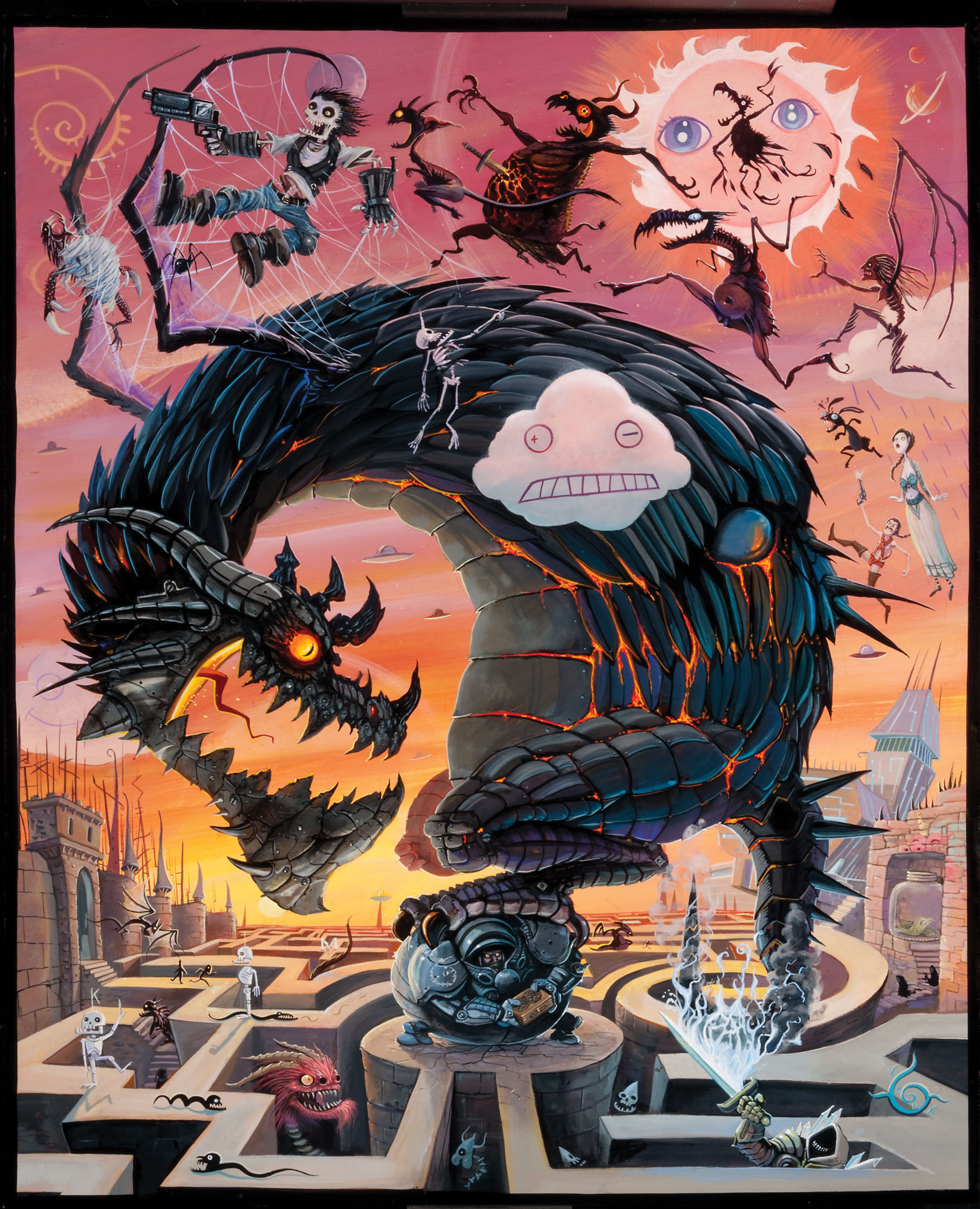
Birdy: My dad was the DM. One game he killed me and my brothers and our friends all in the same attack. We’d been working on these characters for a couple of years.
Joe Vaux: Damn.
Birdy: But then we found a magic pool a little later, and we were okay. Good times. So speaking of childhood, you grew up on Long Island right?
Joe Vaux: Broadly speaking, more specifically Lloyd Neck. It was actually a really awesome place to grow up. I couldn’t have asked for a better childhood, barring some tick-related moments. Kind of out in the country, but close enough to the city that you got little bursts of it. My parents were both artists and professors. We were kind of fish out of water. Everybody else had lots of money and we were just floating by. But they made it work.
Birdy: We had no idea your parents were artists. Did you always make art then?
Joe Vaux: I was always creative and kind of a dreamer. Star Wars or any movie would just set me off into play mode, whether it was with action figures or pretending I was a character running around the yard. I was always busy that way, but I never considered myself an artist.
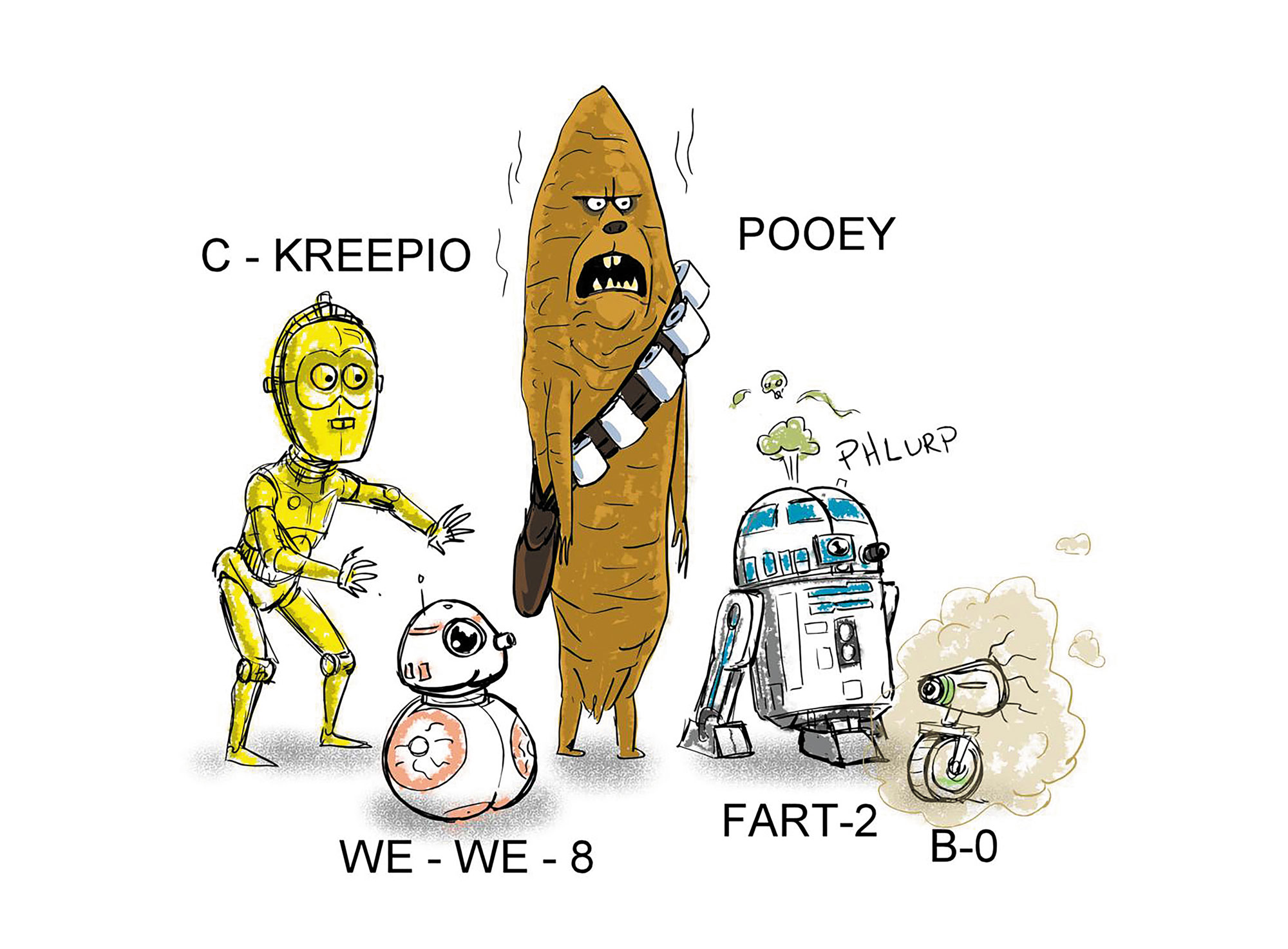
I thought I was going to do something in the sciences. It honestly wasn’t until my junior year of high school when all the counselors started saying, “You need to think about your future. What are your interests?” I was lying in bed looking around my room — I was one of those kids who had posters, art and comics everywhere. This bell just went off: Dude, you want to make movies. You want to make stuff. You want to be an artist.
From that point on, I told my parents I wanted to go into the arts and they really leaned in. Them both being professors helped too. I basically took my mom’s beginning college drawing class and my dad gave me assignments. Initially I thought special effects was going to be the path. They signed me up for figure drawing classes, painting classes, sculpting classes, anything I was interested in.
They helped me groom my portfolio. It had a little bit of me, but also the kind of work a university would want to see — stuff I wasn’t interested in, like drawing pots and pans, reflections, pastel studies. They were pivotal, always supportive of whatever I wanted to do. But we butted heads for a while because I was like, “I want to draw comics. I don’t want to draw pots and reflections.” They’d say, “Just do it. It’ll look good in your portfolio.”
Birdy: Like eating broccoli.
Joe Vaux: Definitely. I was the typical teenager, throwing little tantrums. I’d stomp off and pout, I’m drawing all these stupid things. None of this is going to matter. It did matter. I got a nice little scholarship.
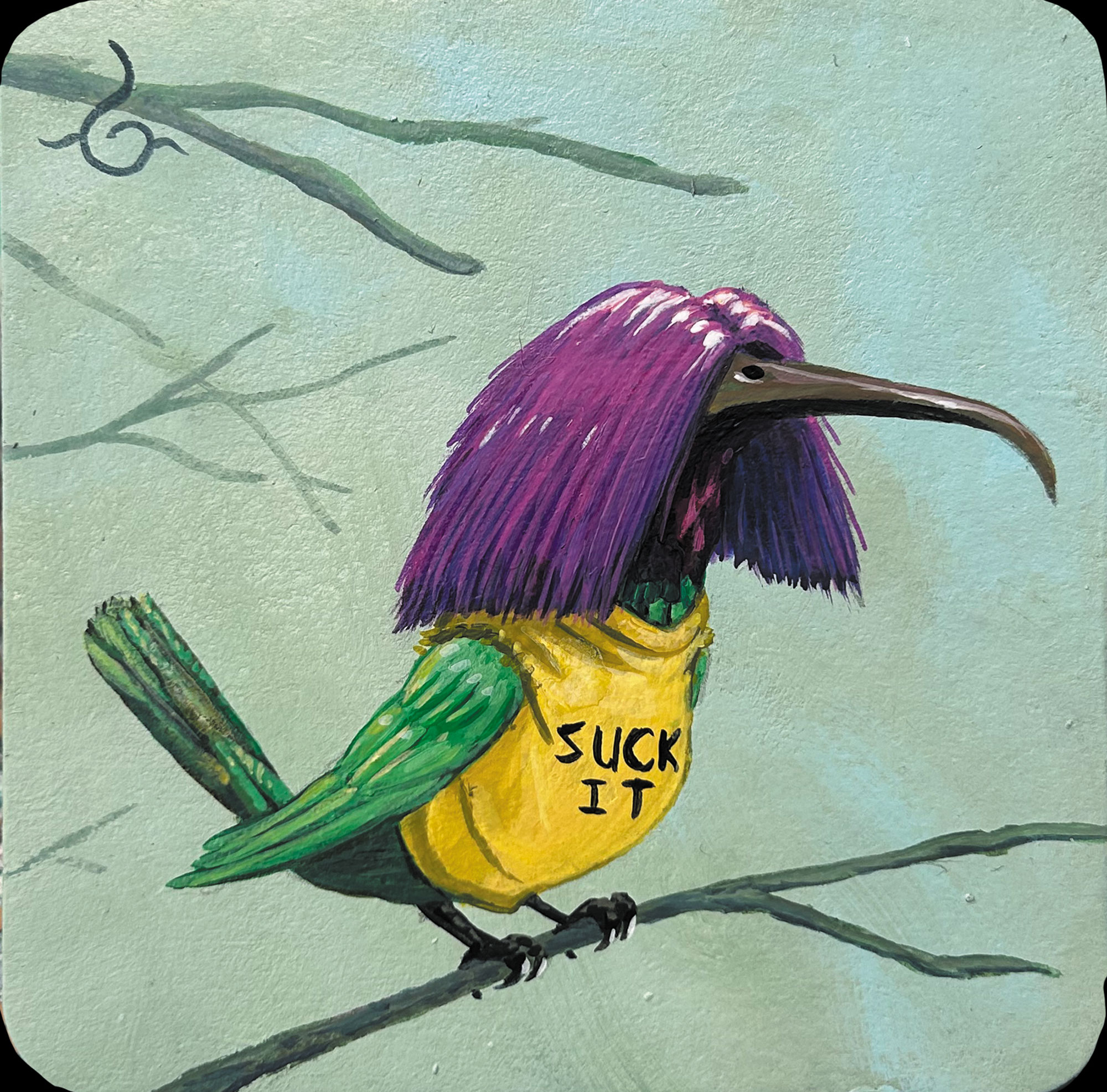
Birdy: That’s really cool you had such a positive entry into art. A lot of people don’t have that safe space for creativity growing up.
Joe Vaux: I was super lucky. A lot of my youth was being dragged to my parents’ art shows or their friends’ art shows. It was just part of my life. I got to see a lot of things. It didn’t mean much to me then, but the exposure was awesome. I wouldn’t be who I am without it.
Birdy: When did you start exploring your imagination with your art?
Joe Vaux: D&D was kind of a launch point in some ways. Drawing your character or a monster you might encounter. My drawing style took a lot longer to develop. I was better with color early on, but it took me a while to get comfortable and create something I was interested in.
Sculpting and building came more naturally. Along with D&D, I’d build little dioramas, castles, pathways. They were more for taking pictures, putting those miniatures into scenes. But the illustrator Joe didn’t really emerge until late college. Maybe I’m just a slow learner, or maybe I wasn’t being instructed in a way that worked for me.
Birdy: Or maybe you just had a bigger scope.
Joe Vaux: Maybe. I had a lot of grand ideas, and when I tried to execute them as drawings, they didn’t come out the way I imagined. That’s probably the frustration a lot of people feel. And when you’re surrounding yourself with work by professionals it’s humbling.
I just kept at it. I knew time would help. I know people who dropped out of high school and went straight into the industry, but I needed those four years, and then some. I needed that extra time to blossom.
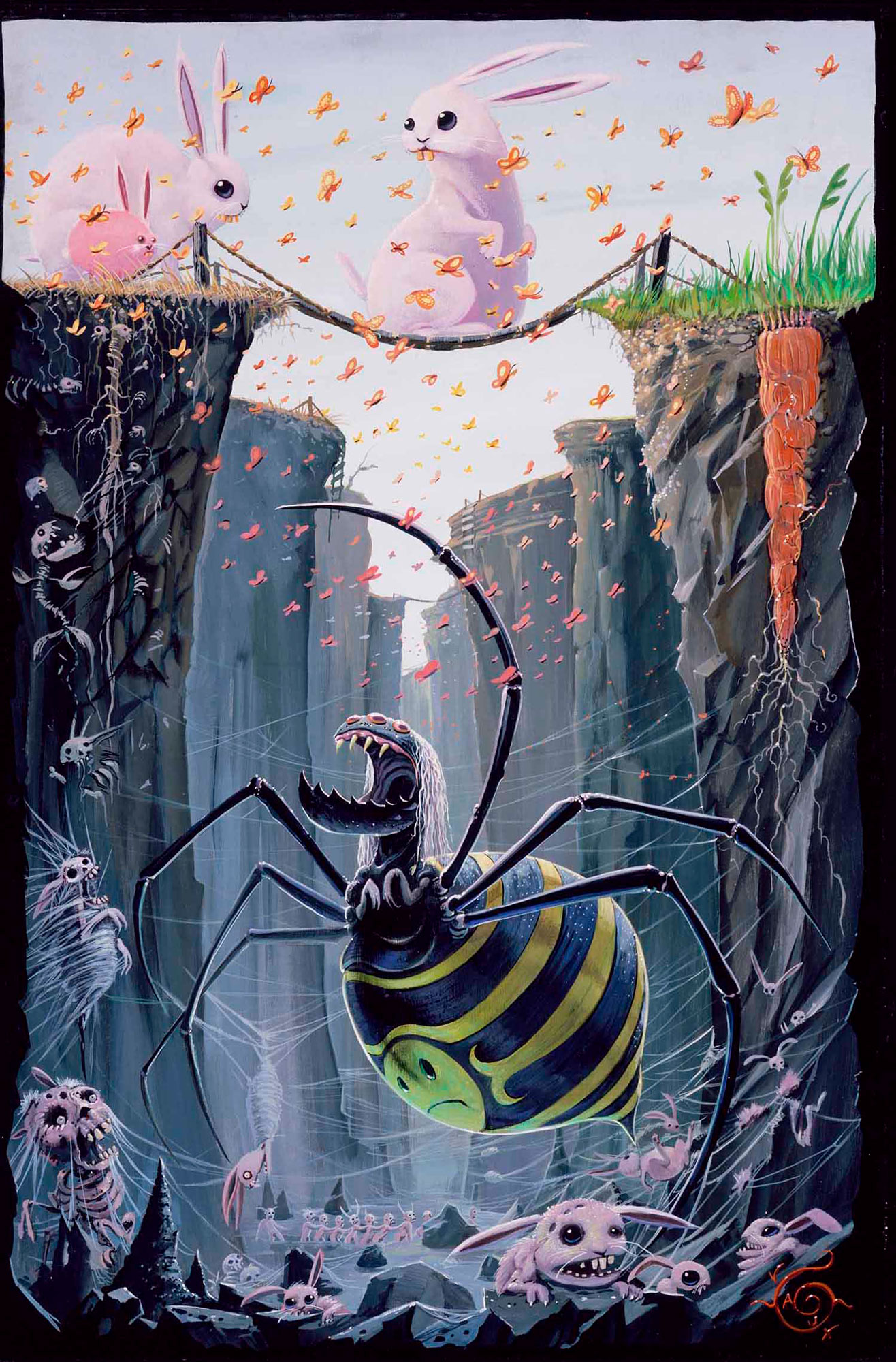
Birdy: At what point did you find your voice — the Joe Vaux style?
Joe Vaux: My style really didn’t materialize until after college. There were no more assignments except the ones I gave myself and I realized I had to keep making things. Along with a few illustration jobs and trying to grease the wheels at DC Comics, I’d do little paintings of characters and send them in. That’s when things started happening.
It was more mixed media then. There was this balance between a punk attitude — not worrying too much about perfection, keeping it free and energetic — while refining and tightening certain areas. That was probably when I started figuring out how I wanted my images to look instead of simply completing assignments.
Birdy: What was it like getting into the industry as a professional artist?
Joe Vaux: I pounded the pavement in New York City, dropping off portfolios all over. Steven Heller at The New York Times gave me a chance. He needed a black-and-white spot illustration for the back of the book review section. The deadlines were insanely early. He gave me the job on a Monday and said, “Give me some options tomorrow.” There was no email. I had to physically bring them in by 7 a.m. I’d get home from the city around 1 p.m. then think through ideas and start drawing. I did three drawings and he didn’t like any of them. He said, “I’ll give you one more day. Try again.” So I did three more, and thankfully he liked one. It was the same emotional cycle — defeat, angry train ride home, wondering if I was ever going to make this work. I only did two pieces for him, but that first job felt huge. I made about 300 bucks. I think I spent more on the train.
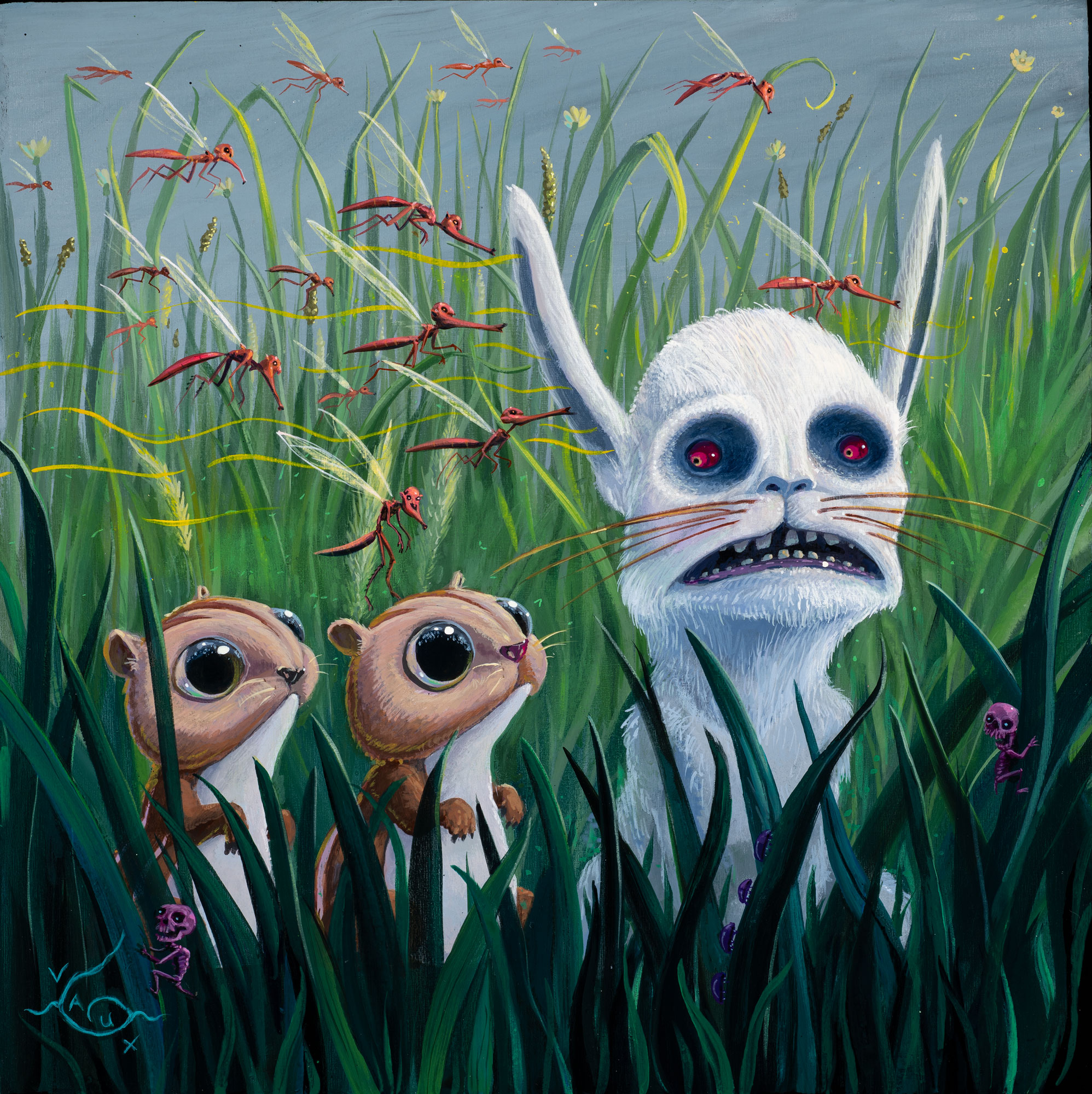
Then I got some color work for a really great magazine that focused on environmental travel. Soon after that, I met Ralph Bakshi. He was really the bridge into animation and my first consistent job.
Meanwhile, I was still trying to get into DC Comics. There was a really nice guy there who eventually he gave me a shot, but I honestly didn’t know what to do with it. I didn’t have friends in the industry who could explain the process. The assignment was to color a four-page Lobo comic. He handed me printouts of the original art. I remember thinking, Do I just paint directly on these? I was too shy to ask. I didn’t have a computer or scanner, so digital wasn’t an option. I ended up watercoloring them. It looked like complete shit.
But Ralph Bakshi was different. He was more of an artist’s artist. He liked messy work, paint, rough edges, my sense of color, things that were a little edgier. That became a consistent gig. He was doing shorts for what eventually became Cartoon Network, though it was still Hanna-Barbera. They had this program where animators could pitch original shows and produce three- or five-minute shorts. That’s where things like Dexter’s Laboratory and The Powerpuff Girls came from.
Ralph had two insane projects. They were kind of bluesy, kind of jazzy about this weird rubbery character with a cockroach friend who played saxophone called Malcom and Melvin. He never gave me scripts or outlines. There was almost no direction. But one thing I’ve always been good at is delivering work on time. Whether it was great or not, I don’t know, but I got the job done.
That relationship evolved over about a year. Then he pitched a show to HBO called Spicy City. It used his rubbery character designs in these Blade Runner-style stories. He told me, “They want to do it. They’re opening a studio in LA. I’m not going, but I’ll put in a good word for you.” That’s what brought me out here. When I got to HBO, they initially put me on Spawn. I thought, Okay, I’ll try to keep up. The people there were fantastic, willing to help me learn. It was almost like graduate school.
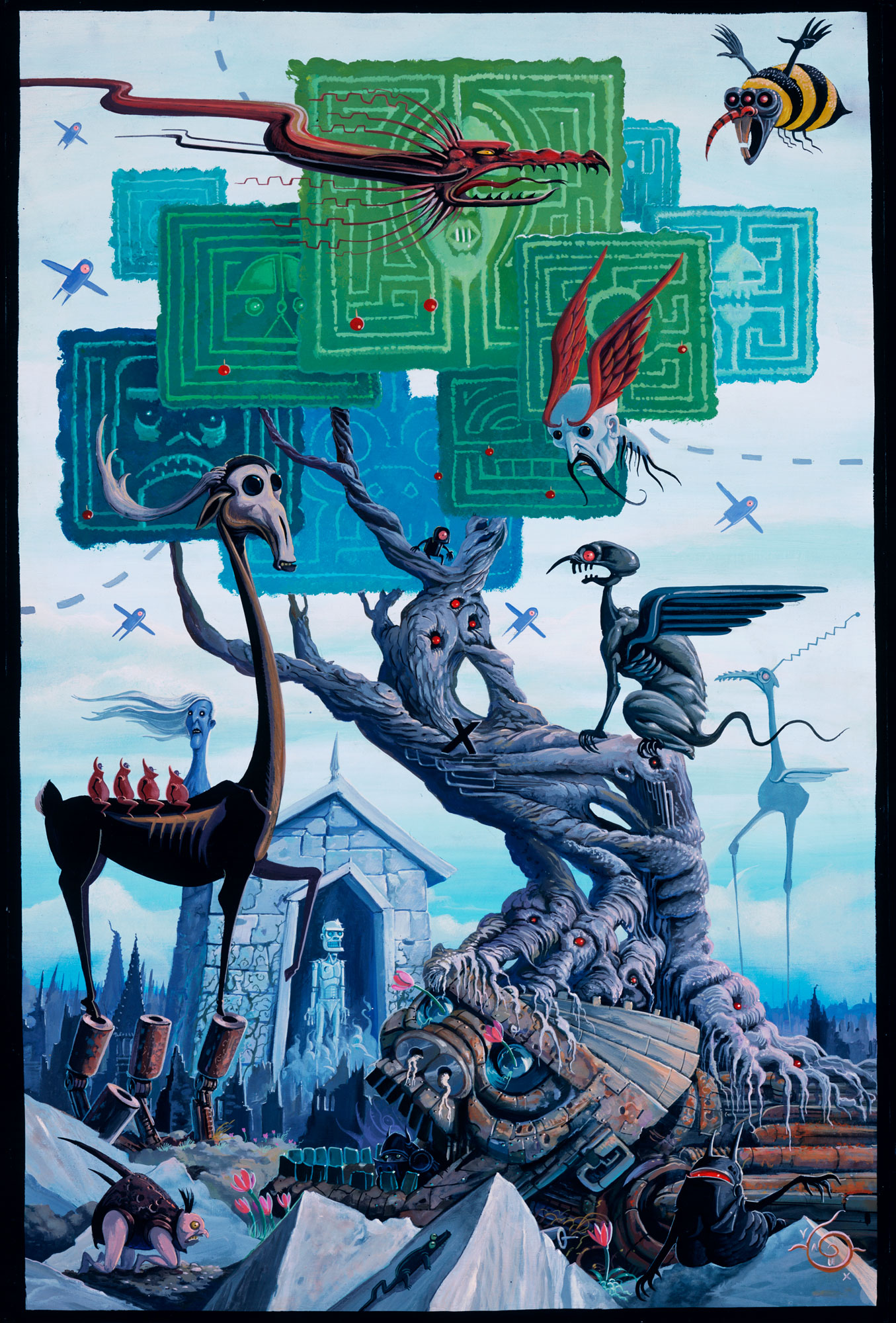
Birdy: Being thrown into the deep end by great mentors is just the best. Is this what led you to Family Guy?
Joe Vaux: So I worked at HBO with a bunch of different people. They hired this one guy, Alfred Gimeno. He was one of those young prodigy-types. He could draw right out of the womb. He worked on a lot of classic old-school animation like Scooby-Doo.
HBO started looking at graphic novels and various edgy comics because they wanted to make adult animation. They hired Alfred to figure out how to turn those comics and pitch materials into possible shows. He’s a super bubbly guy and helped me through a couple of projects there. Once HBO kind of crumbled as an animation entity, he ended up working on Dilbert. The show was on UPN at the time, competing with The Simpsons. It was primetime adult animation. My boss on that show became the main producer on Family Guy. I worked with her for two and a half years and when Family Guy came back, they gave me an opportunity. I started as a revisionist, correcting directors’ notes, things like that. Twenty-two years later, I’m directing. It’s been a great place to work.
Birdy: It’s incredible how long you’ve been a part of the show. We imagine your sense of humor has helped.
Joe Vaux: It doesn’t hurt. Not MacGyver it, but joke my way out of a tough situation. We work really hard on the show we make now, and it’s evolved a lot over those first three seasons, which I wasn’t a part of. Now content can be edgier, grosser, weirder, darker. In the landscape of animation, we’re probably a little tamer now, but I still think we do a lot of fun things, and I still get a lot of laughs out of it.
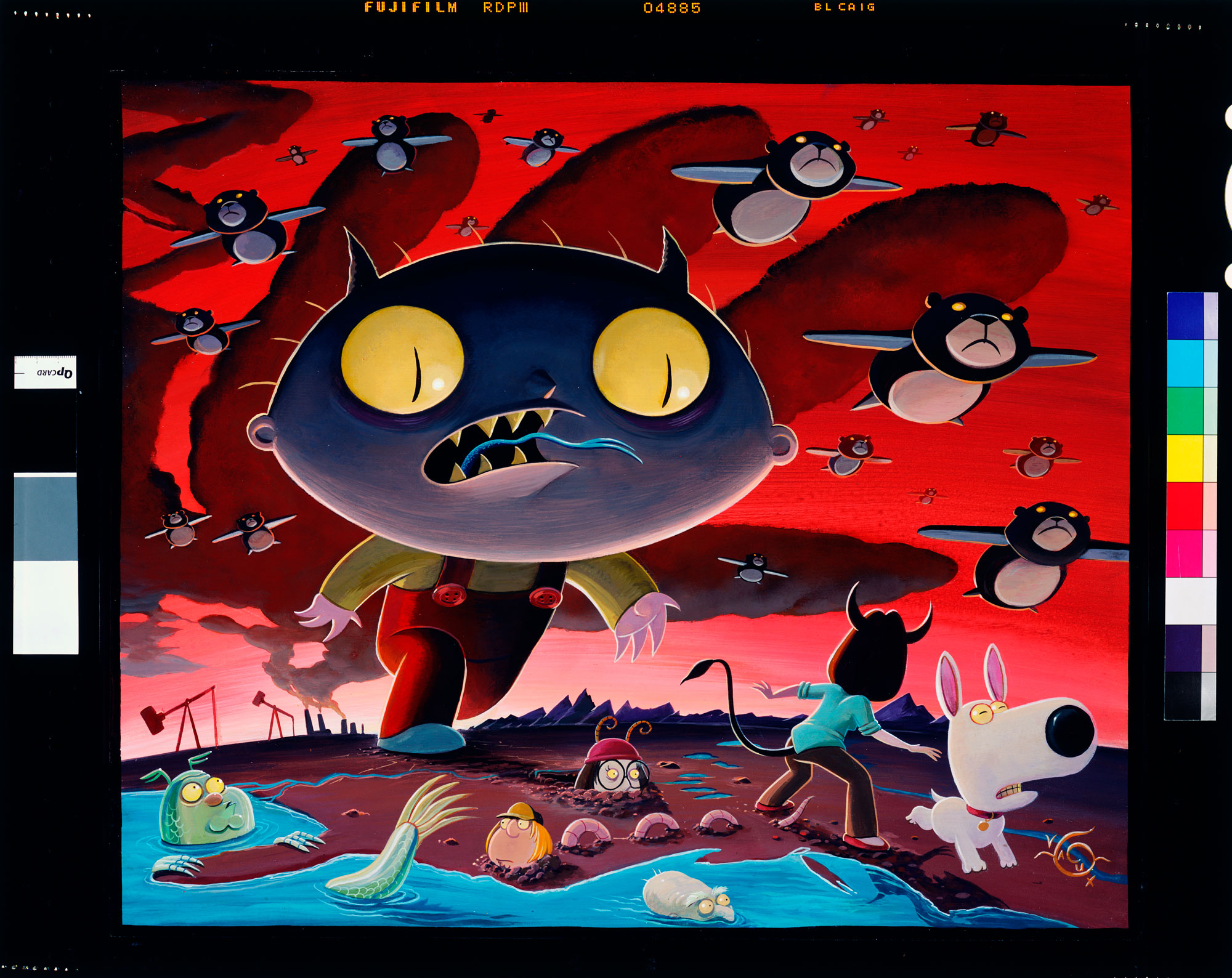
Birdy: Does your own artistic voice come through with directing?
Joe Vaux: A little bit. We have lots of checks and balances. There are people above me visually who really help keep the show as interesting and creative as possible and make the most out of each scene. Ultimately, we’re a very writer-driven show, and our supervisors are really good at steering us if we’re heading off track. But I definitely inject as much of myself as I can into translating the script into thumbnails, working closely with the artists, designing things. I’m very hands-on and I’m probably a little opinionated. A lot of it comes from not liking stress. The more thought I can put into what something looks like or how a scene might unfold early on, the smoother everything goes later.
Birdy: It’s funny you don’t like stress because you do so much in addition to Family Guy — creating several paintings for multiple galleries, your own personal work, other side projects, your family. Yet, you’re this really levelheaded, chill person. How do you maintain balance?
Joe Vaux: Where I’m sitting now is my Family Guy workspace. Any digital work happens here. My paintings are in another room. It’s a small studio that my wife and I share. After the workday I try to take a little break. Walk my dog Ripley. Eat dinner. Watch whatever’s on. Then I try to paint for at least an hour. On weekends, my ideal routine is getting up before my daughter, putting on some music, and painting for a couple of hours before she wakes up.
As far as juggling everything and avoiding stress, I’ve always tried to stay way ahead of the game. My show at Mortal Machine Gallery was finished three or four months ago. It was only five pieces, so as soon as they asked, I started working while I was finishing paintings for my September show at Brassworks Gallery, alternating between the two. I’ve already been done with that work for a month.
I’ve always tried not to overextend myself. Sometimes people ask me to do things and I’ll say no because I think it’ll be too much, even if I probably could squeeze it in. I’m always managing what’s going on in my head. I also want to feel physically good. We go bouldering, which I love. Lately I’ve also been volunteering a lot — about six hours a week at a nature center. I get dirty, pull weeds, prune plants. Especially in the evenings, it’s really peaceful. You hear coyotes. It’s just me and the plants. The people appreciate it and it gives me a reason to take a shower because I’m disgusting afterward. Making time for things like that is really important.
I also just agreed to be in a show at Arch Enemy Arts in Philadelphia in 2028. They need 10 to 12 paintings, and I bet I’ll have the whole show finished by the middle of 2027. Then I’ll just sit on the pile until it’s time. That’s just how I operate.
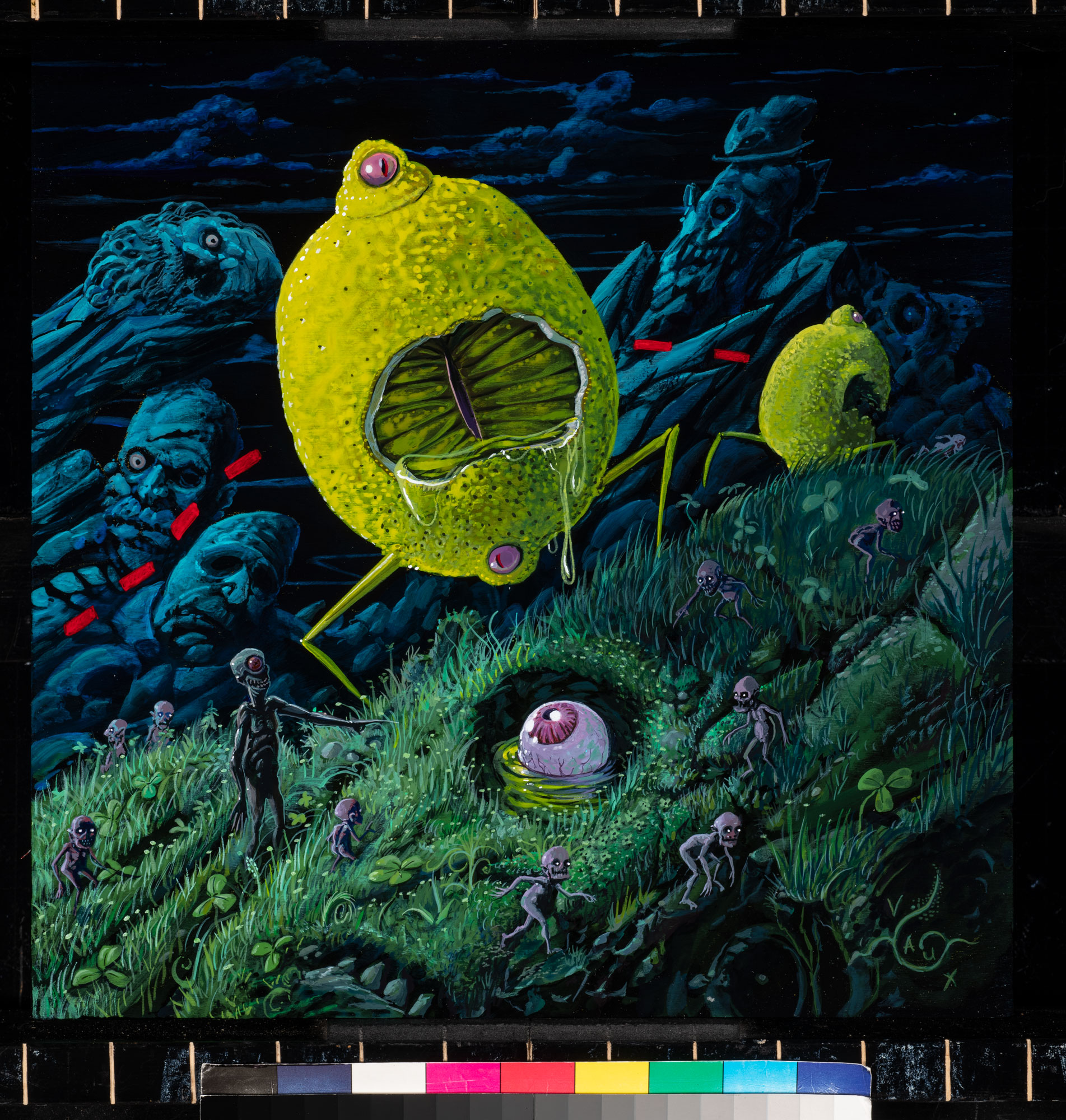
Birdy: It’s so nice talking to other creatives, especially those who work from home, because discipline, time management — it’s no easy task.
Joe Vaux: Discipline was hammered into me pretty early. If you want things to happen, you have to work hard. That became part of who I am. It also helps that I genuinely enjoy what I do. Sometimes getting into the studio takes a little effort, but once the music’s on and the paint’s poured, the mechanics take over.
Birdy: Finding that balance in your own life is one thing. But then add the depravity of everything that’s happening right now in the world, and trying to stay grounded is a whole other challenge. As an artist, how do you process this moment in time?
Joe Vaux: Even going back to the stuff I was creating in college when I was really stressed out about animal rights, my art has always been semi-ventilatory. It’s fantasy — exploring fantasy worlds and things I’m dreaming about. But I was definitely getting emotions out. I created a couple of anti-lab, anti-poaching artworks that were maybe precursors to some of the work I do now. I had a character assignment once, and I did this really disgusting old George Bush character. And during the first term of this orange bastard, I did a lot of daily drawings of him. Just getting it out. I made a lot of enemies and got some scary Instagram responses. Right now, I’m a little more about making the world around me nice — and maybe this is why I’m volunteering so aggressively. Be a good person. Be a mirror or a projection of what I would like the world to be. So with my art right now, it’s a little more of an escape as opposed to painting images that are clearly poking at things. I think my artwork still has an environmental edge to some of it, you know, trying to protect things.
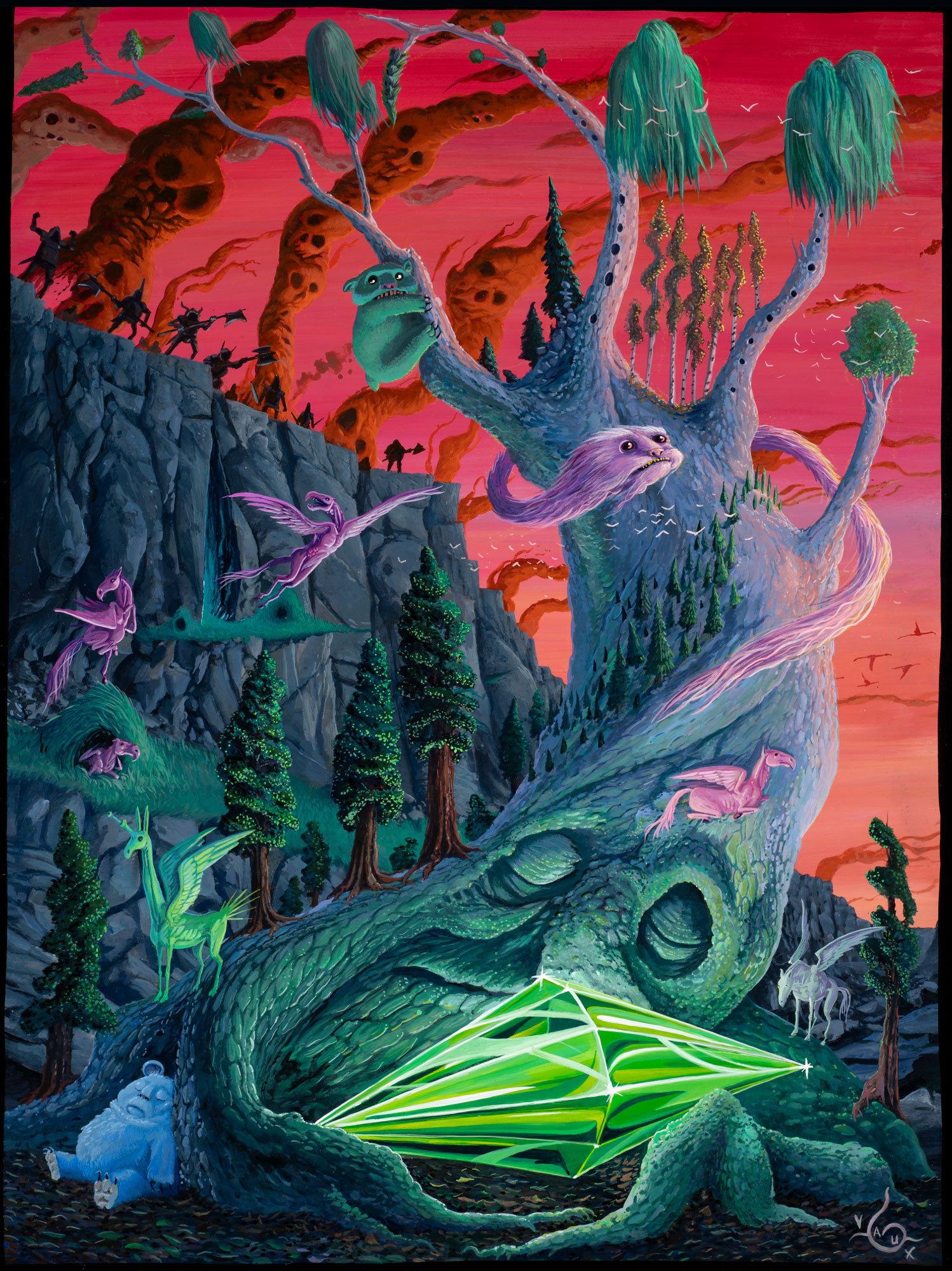
Birdy: Be the change. We always try to be an oasis with Birdy — fun but real. We feel that way about you and your work. You’re such a sunny and kind person, but then there’s this darker element and humor in your art.
Joe Vaux: For sure. It’s kind of therapy for me too. Anytime there’s a victim in my painting, I’m projecting that onto society. It’s aimed at certain people. Maybe not visually, but the intent is there. It’s cathartic. I’m trying to chase out some of the demons. I’m not going to go kill or hurt anybody, but I can at least paint the anger. That’s how I’m coping. It’s healthier.
Birdy: Tell us a little bit about your show at Mortal Machine Gallery.
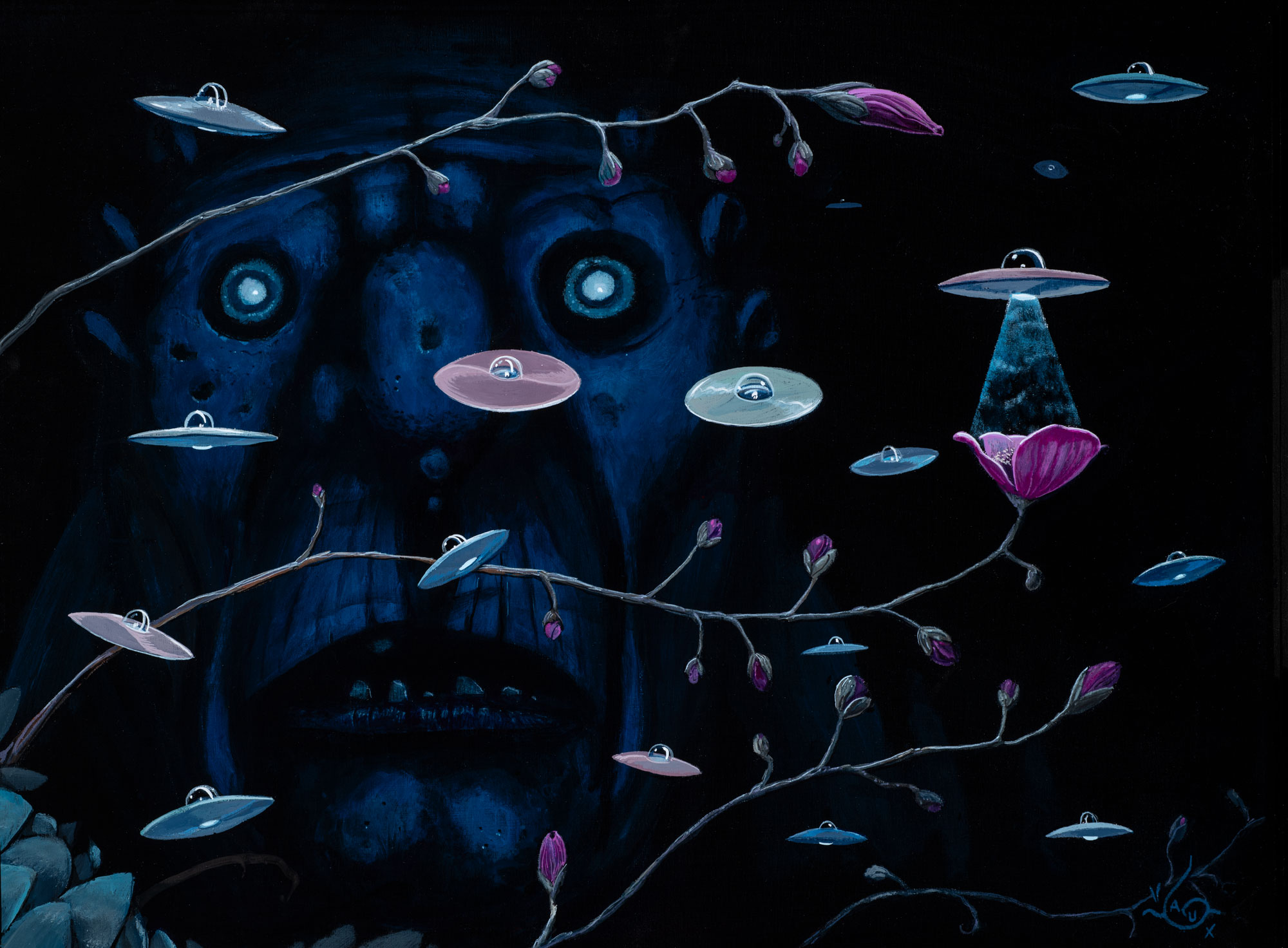
Joe Vaux: It’s a group show called Signals From Elsewhere. The title alludes to aliens and extraterrestrial contact. At the time I was painting for it, there was another round of UAP news. You were seeing little ships flying around. I kind of latched onto that. I’ve done paintings with flying saucers before, but not a giant Independence Day-style invasion. More like they’re little bugs.
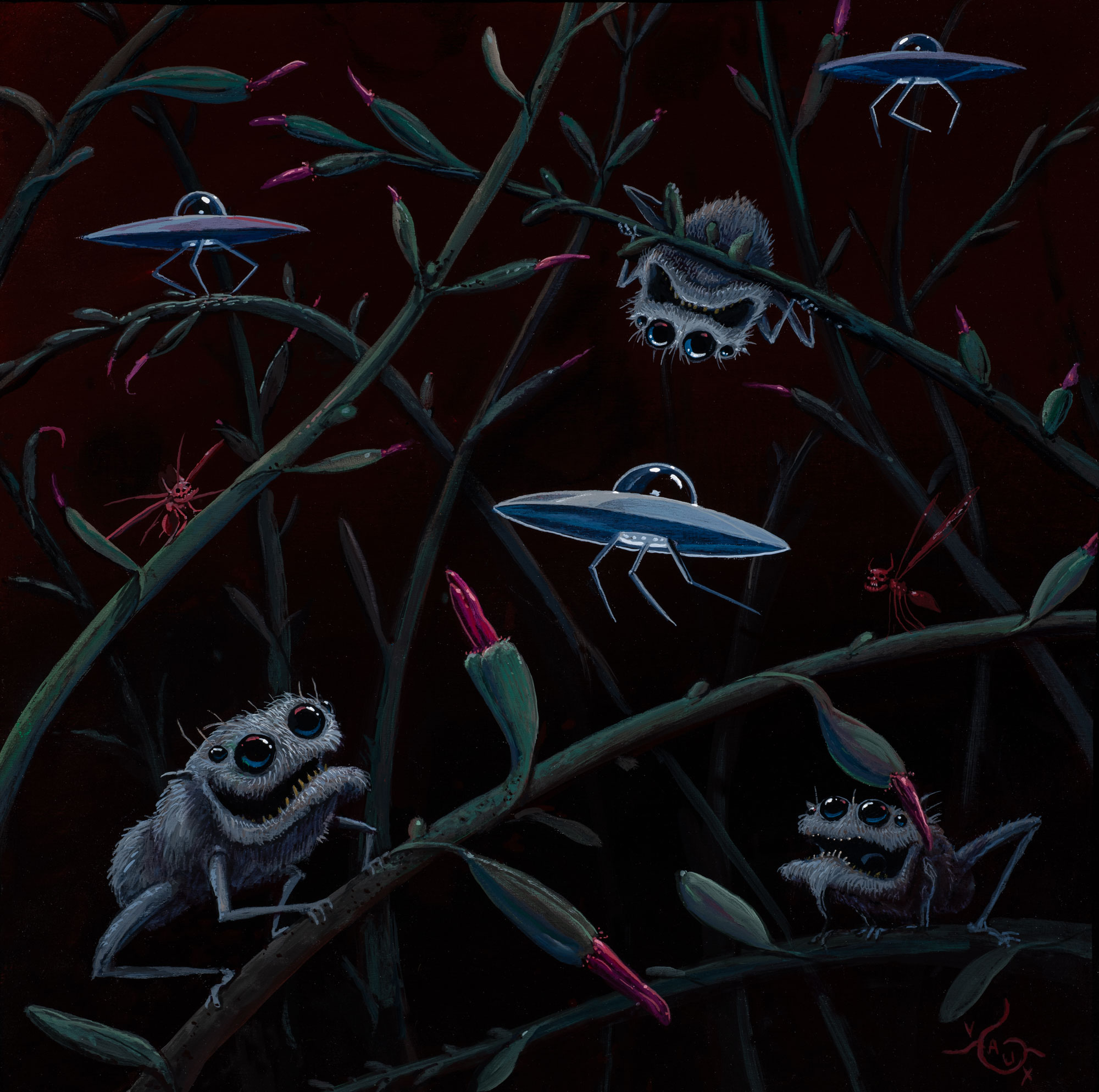
I’ve always thought bugs were like little aliens. Anytime I see a praying mantis crawling around, I can’t help but think, Where are you from? So I treated the saucers like insects. Maybe the ships are huge, but on the planets they’re visiting they’re more like bugs, flying around and meeting the locals. I ended up doing this series of mostly nocturnal scenes. There are little beams of light coming down from the ships like they’re investigating things. But they’re also being watched by something else that lives there.
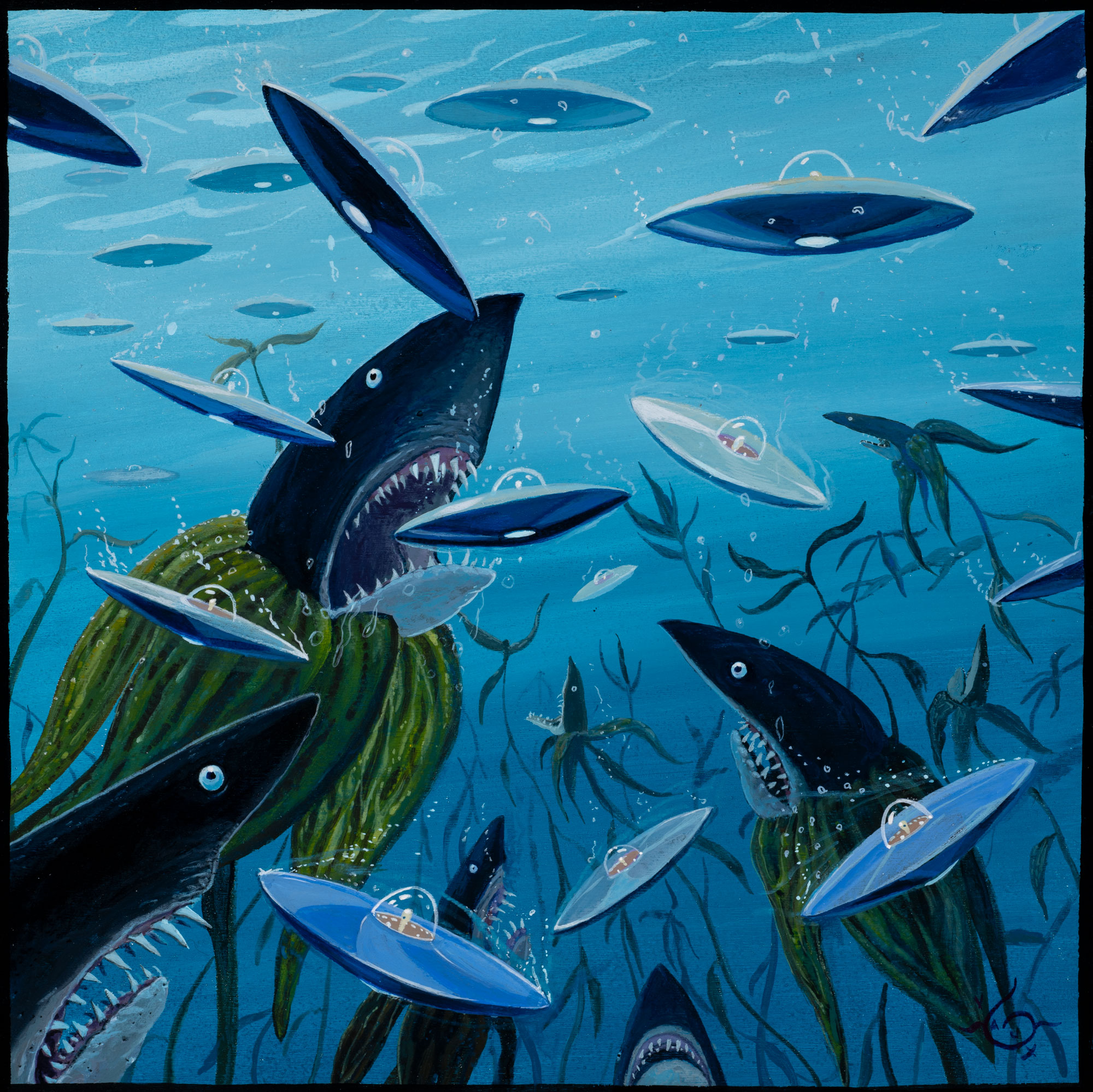
There’s one aquatic painting with sharks. The title was stolen from the Kessel Run — Han Solo bragging about doing something really difficult with his ship. So I imagined an aquatic version where they have to swim through these shark-filled kelp forests. It became Kelp Run.
Birdy: Speaking of sharks we wanted to talk about them and Jaws.
Joe Vaux: Love. Go ahead.
Birdy: You love sharks. We love sharks. Did Jaws influence your fondness of them?
Joe Vaux: I mean, Jaws terrified most people, right? But I think even as a kid, part of me rooted for the shark. When I finally read the book, the shark lives. It disappears into the deep blue. I think that was the beginning of it. And those early National Geographic shark issues. I used to love flipping through those. I’m certainly scared of sharks, but I think they’re beautiful and graceful. Their design is just perfect.
I always dug dragons too. I like things that scare humans, that still put fear into us and humble us because we think we’re the apex species on this planet.
Birdy: We love that about your art. The beasts, creatures, monsters, sharks — they seem like the protagonists, the good guys. At least to us.
Joe Vaux: To me, they are the good guys. We’re in their environment. It’s the risk we take. I’m always rooting for the animals.
Birdy: They’re better than humans.
Joe Vaux: They really are.
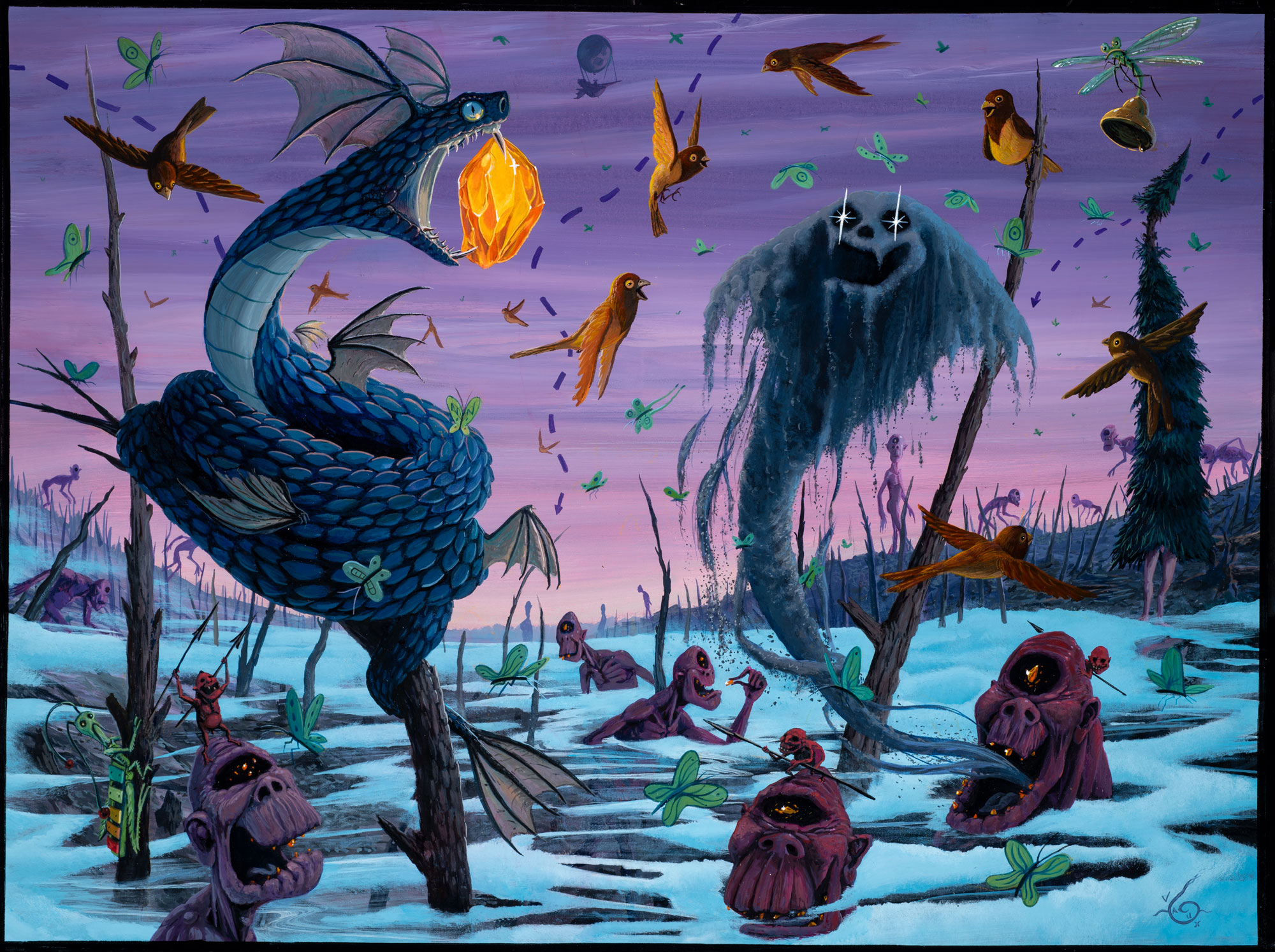
Birdy: It always feel like we’re stepping into their world too with your art. Each painting is like an episode, or a diorama, always capturing a moment. How much of that is planned out?
Joe Vaux: I always travel with a notebook. If I’ve had a particularly hard drawing day, or I know I’m going to paint after work, I’ll sketch. But I don’t stress too much about drawing. My whole point is that because I redraw things constantly in animation, I don’t want to lose the playful energy when I’m doing my own work. I’ll have a loose composition, but I don’t like to overthink it. I work a lot of it out directly on the painting. It leaves room to discover something new or try something unexpected.
Sometimes that bites me in the ass, but I’ve done enough of these now that I can usually wrestle my way out of a tight situation. Keeping it light and fun has helped keep the passion alive. I’ve always come from a place where maybe I didn’t feel like I drew quite as well as the next person. I think I get scared to put too much energy into a drawing because I might realize I don’t like something and abandon it. If I start with the painting instead, I’m already committed. For my kind of punk style, it’s more like, “Let’s make it happen.”
Birdy: Free association. Flow state. It’s kind of how you go about life. You’re very in the moment, always moving on to the next creation.
Joe Vaux: It’s ironic because I’m also highly neurotic and anxious. You’d think all of these things couldn’t exist in the same head.
Birdy: For whatever reason this is bringing a saying to mind: “In life you need two things: thick skin and a good sense of humor.”
Joe Vaux: Yeah, both of those get tested daily, whether you have them or not. I guess some people naturally let things roll off their shoulders a little better, but for me it’s been something I’ve had to learn. Either you learn to avoid the situations that threaten your thin skin, or eventually it gets a little thicker. Artists are sensitive little creatures.
Birdy: We are. We’re also not meant to go through everything alone. It’s okay to ask for help, to reach out. A quick message to another artist can remind you that you’re not the only one feeling a certain way.
Joe Vaux: It’s like birds of a feather flock together. Different birds have different stories, but you’re all kind of feeling similar bird feelings, so it’s nice to have bird friends.
See more of Joe Vaux’s work & follow along Website | Instagram
Signals from Elsewhere | Group Exhibition
Mortal Machine Gallery | New Orleans, LA
Open through July 2026 | Learn more
Bug Off | Solo exhibition
Brassworks Gallery | Portland, OR
Opens Sept. 12, 2026 | Learn more
Head to our Explore section to see Joe’s past published work in Birdy, and keep your eyes peeled for more by this talented artist.