
Published Issue 151, October 2026
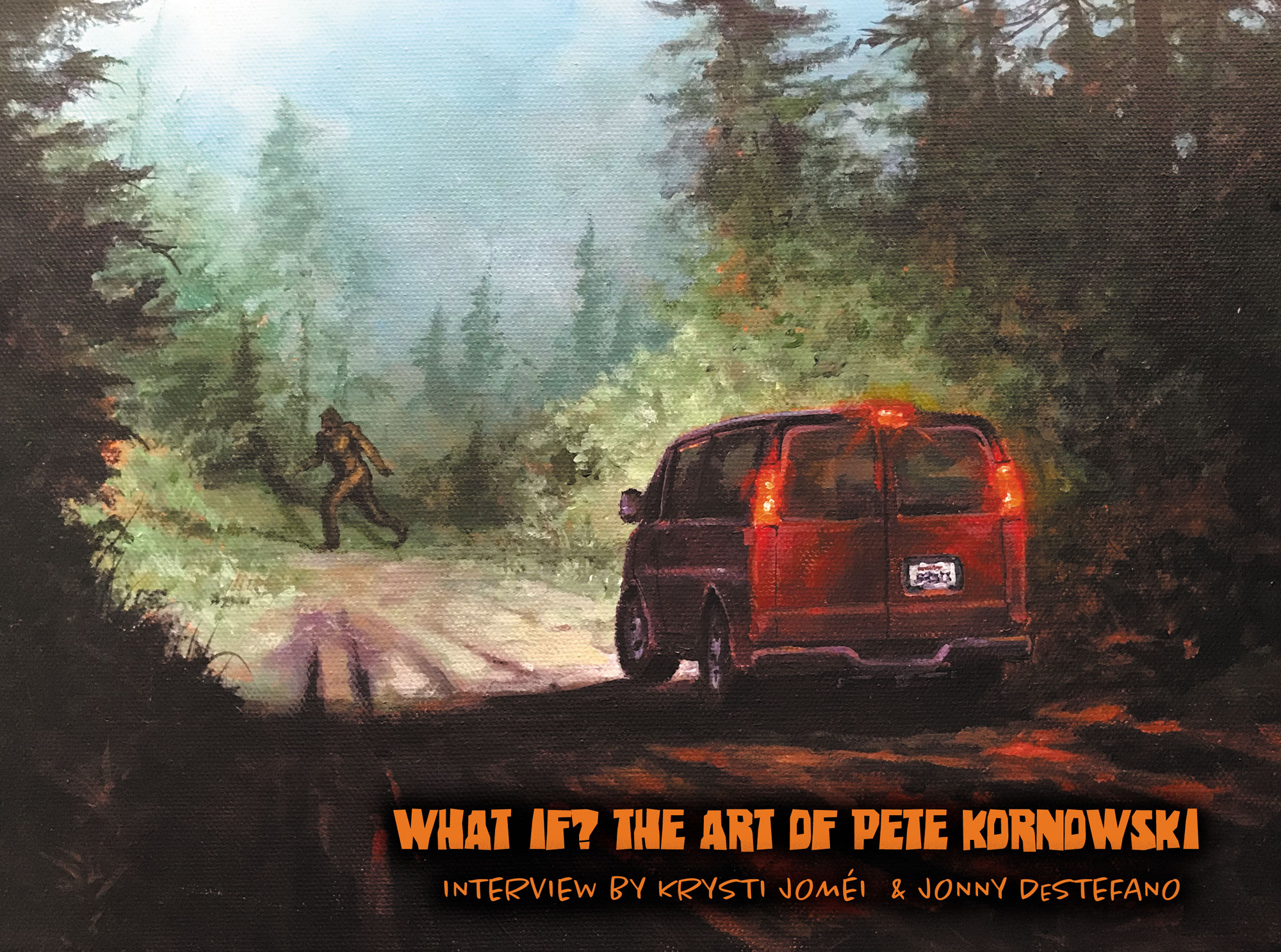
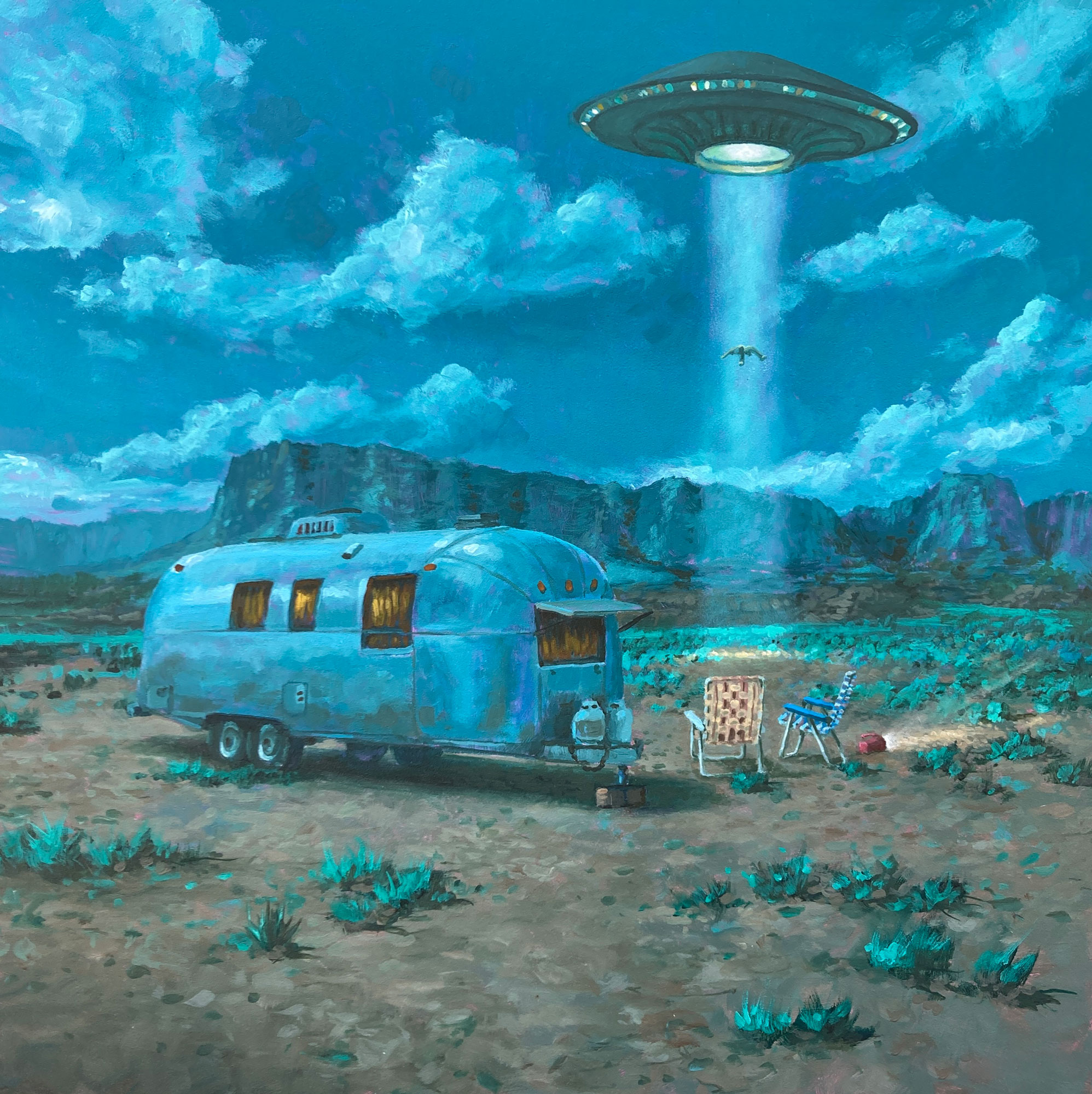
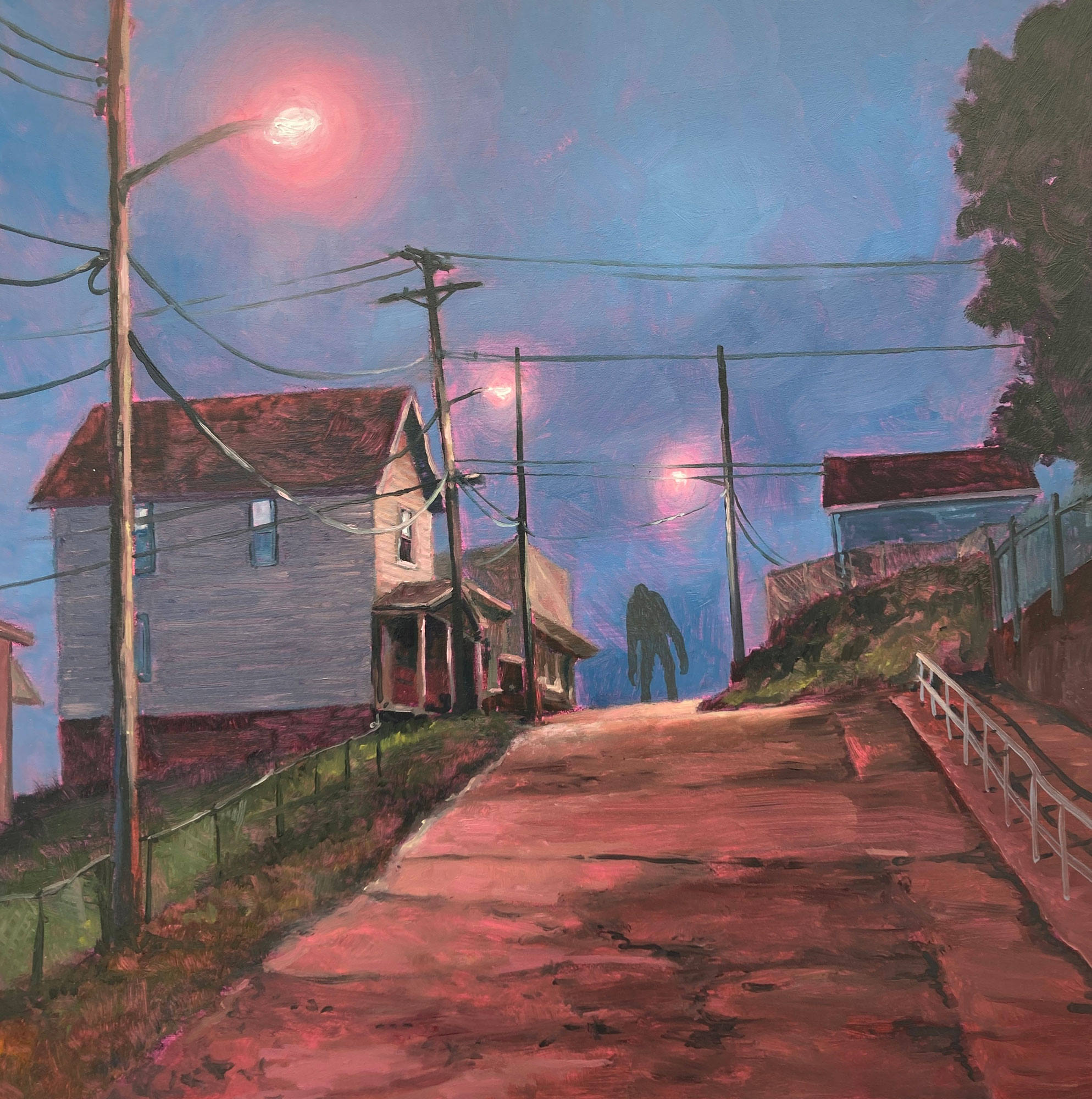
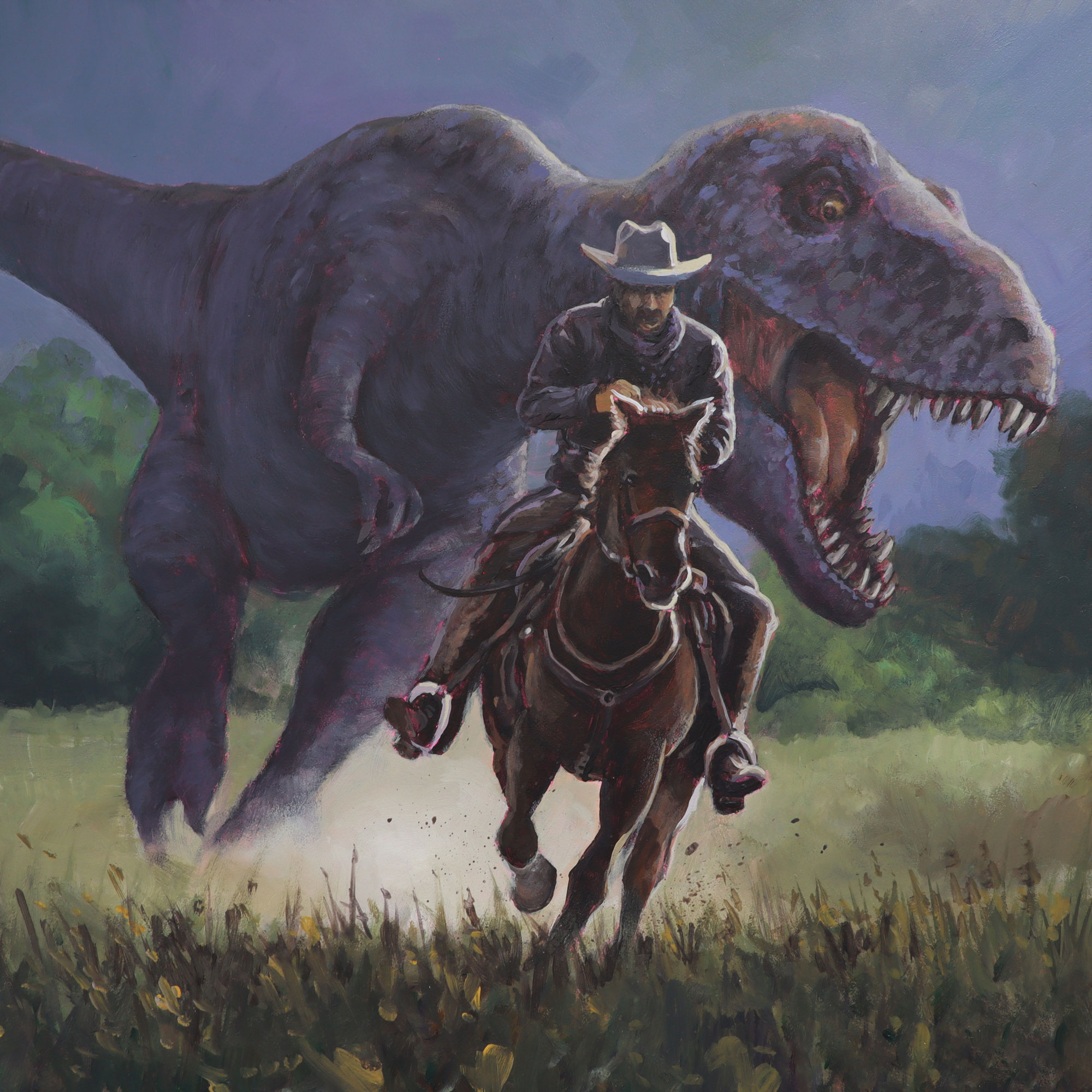
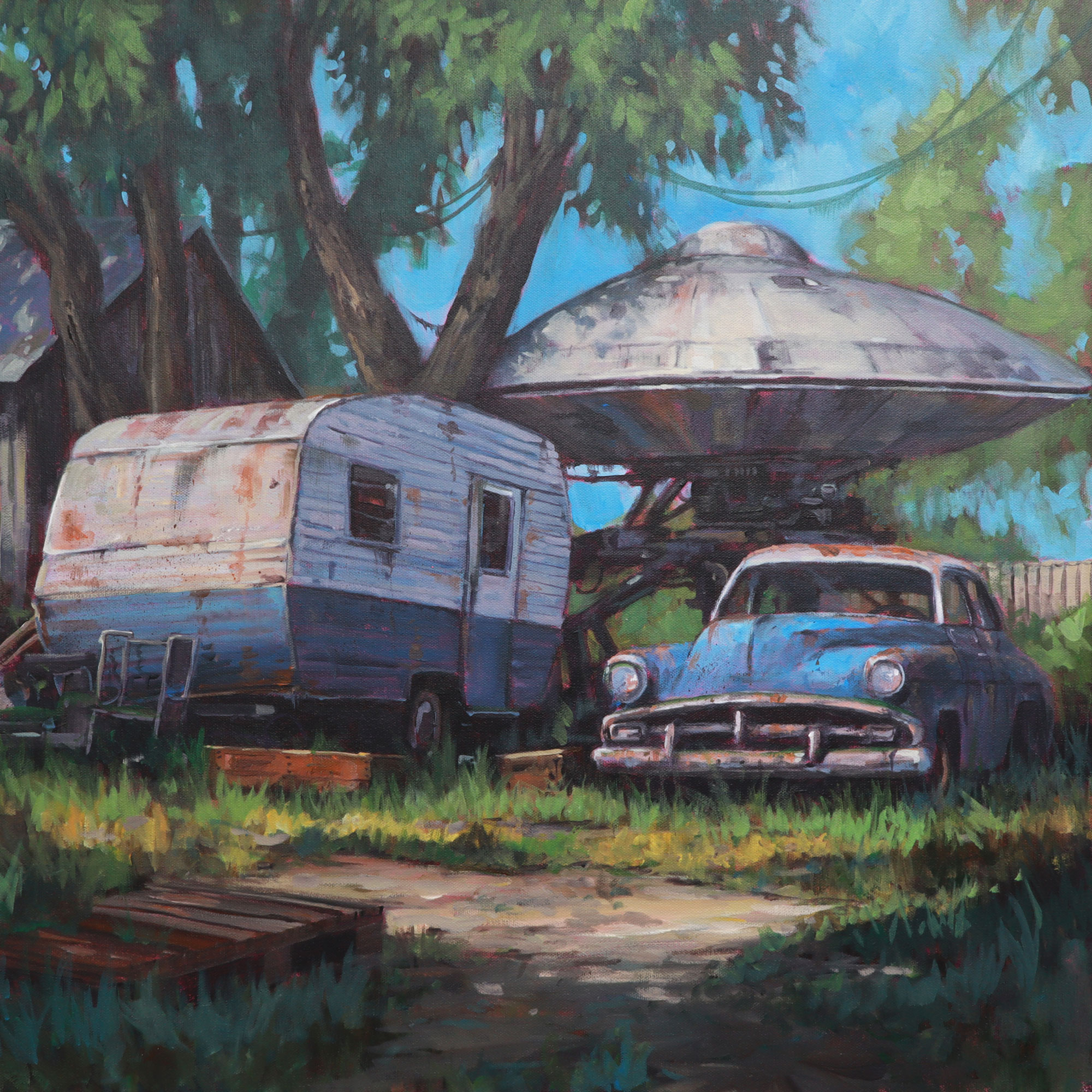
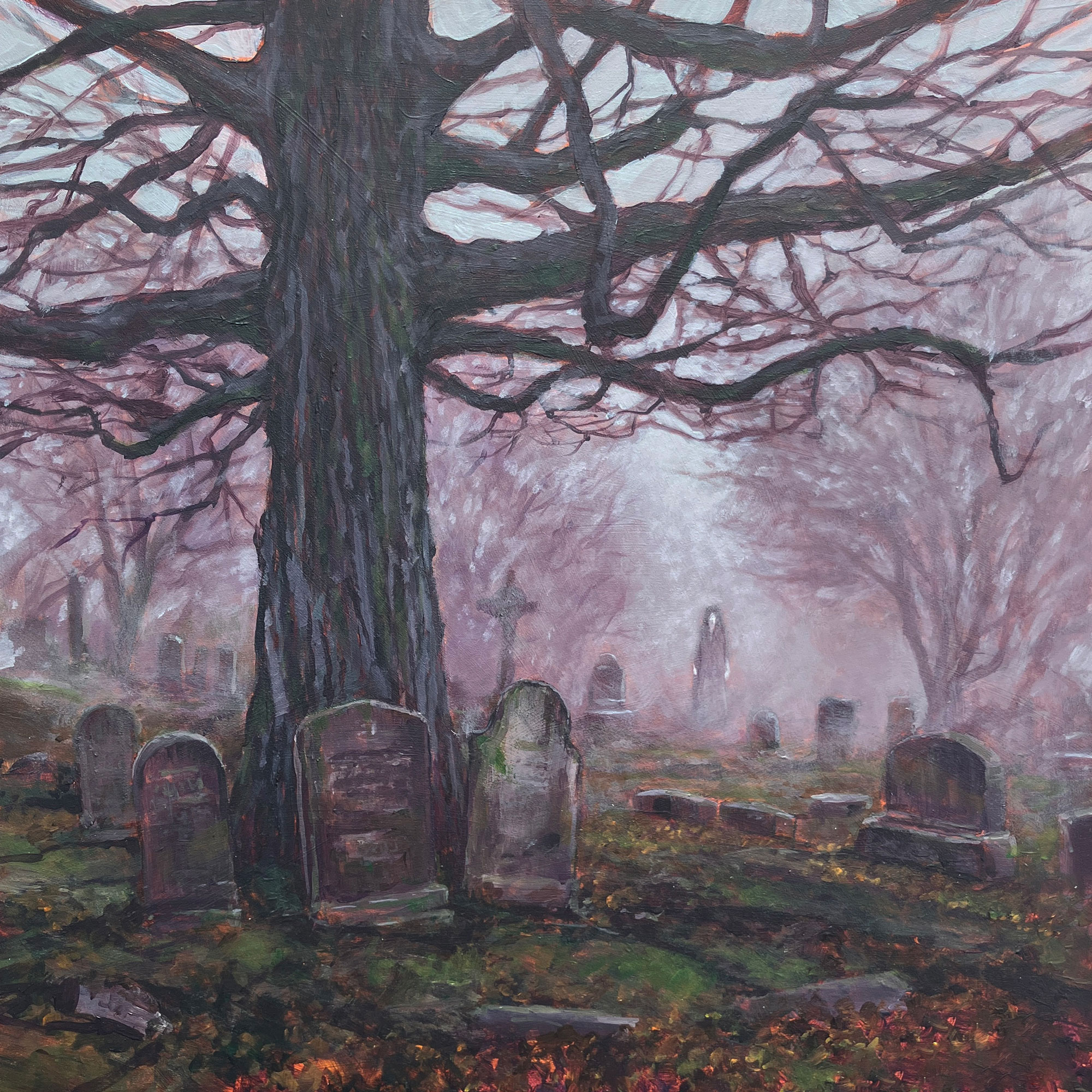
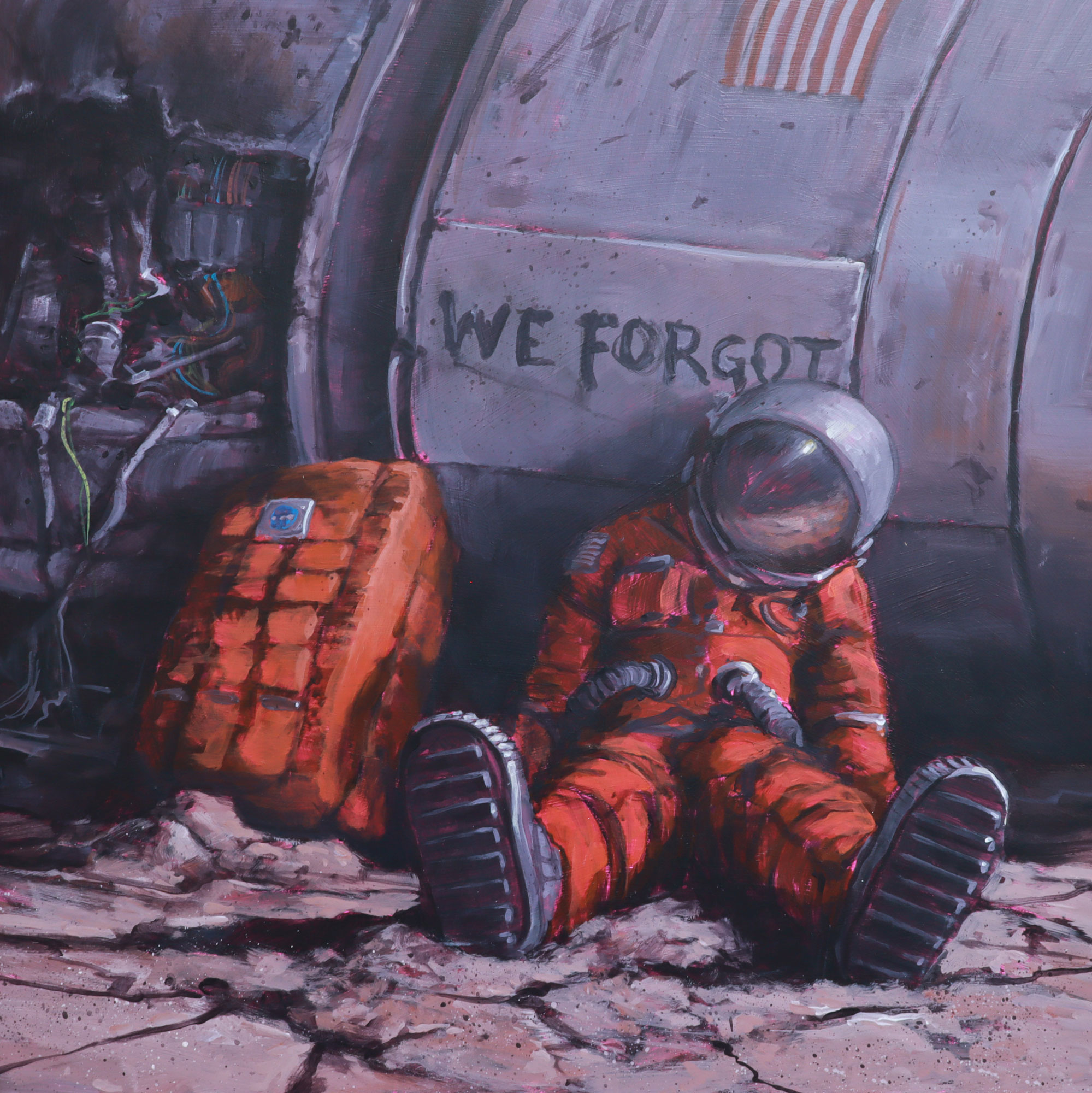
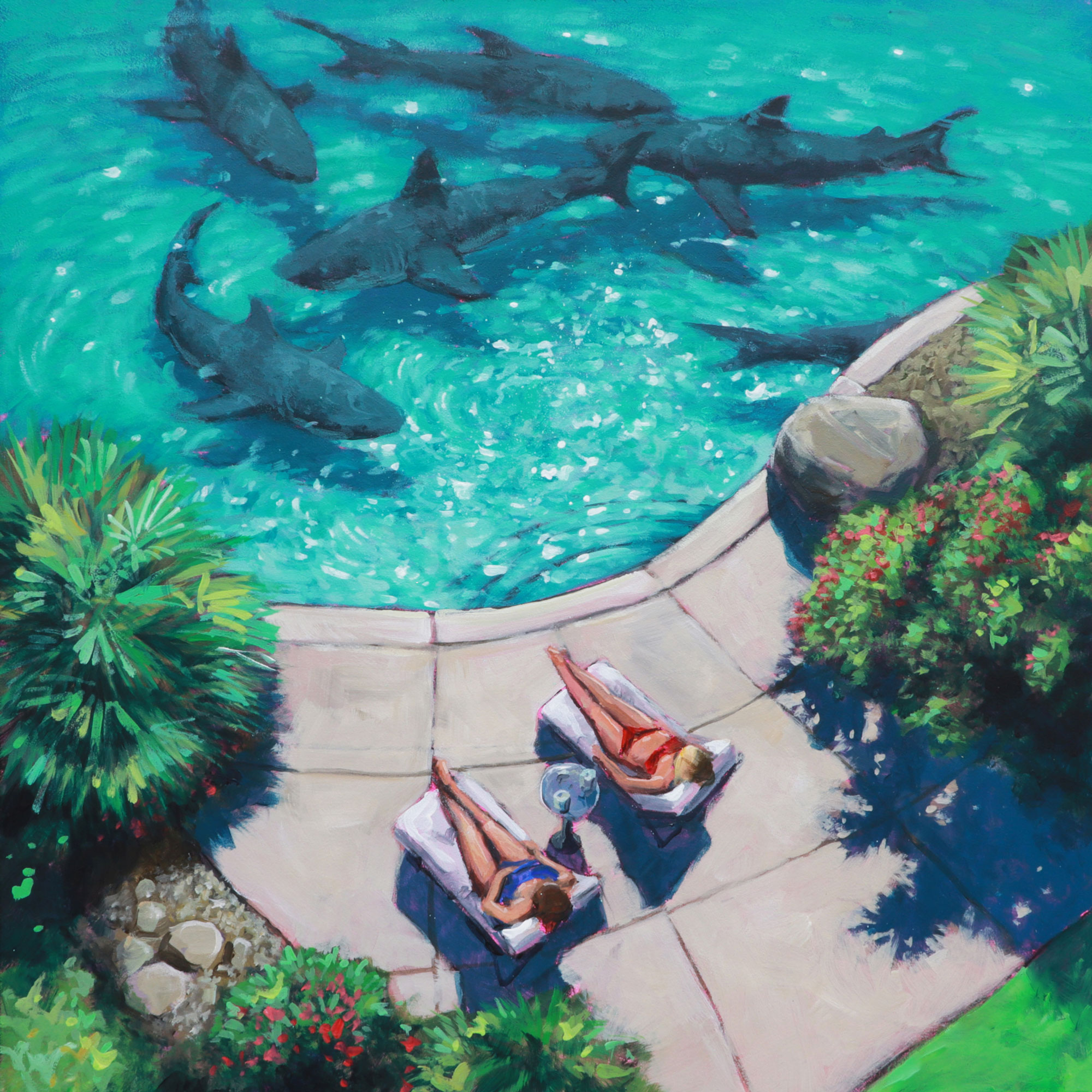
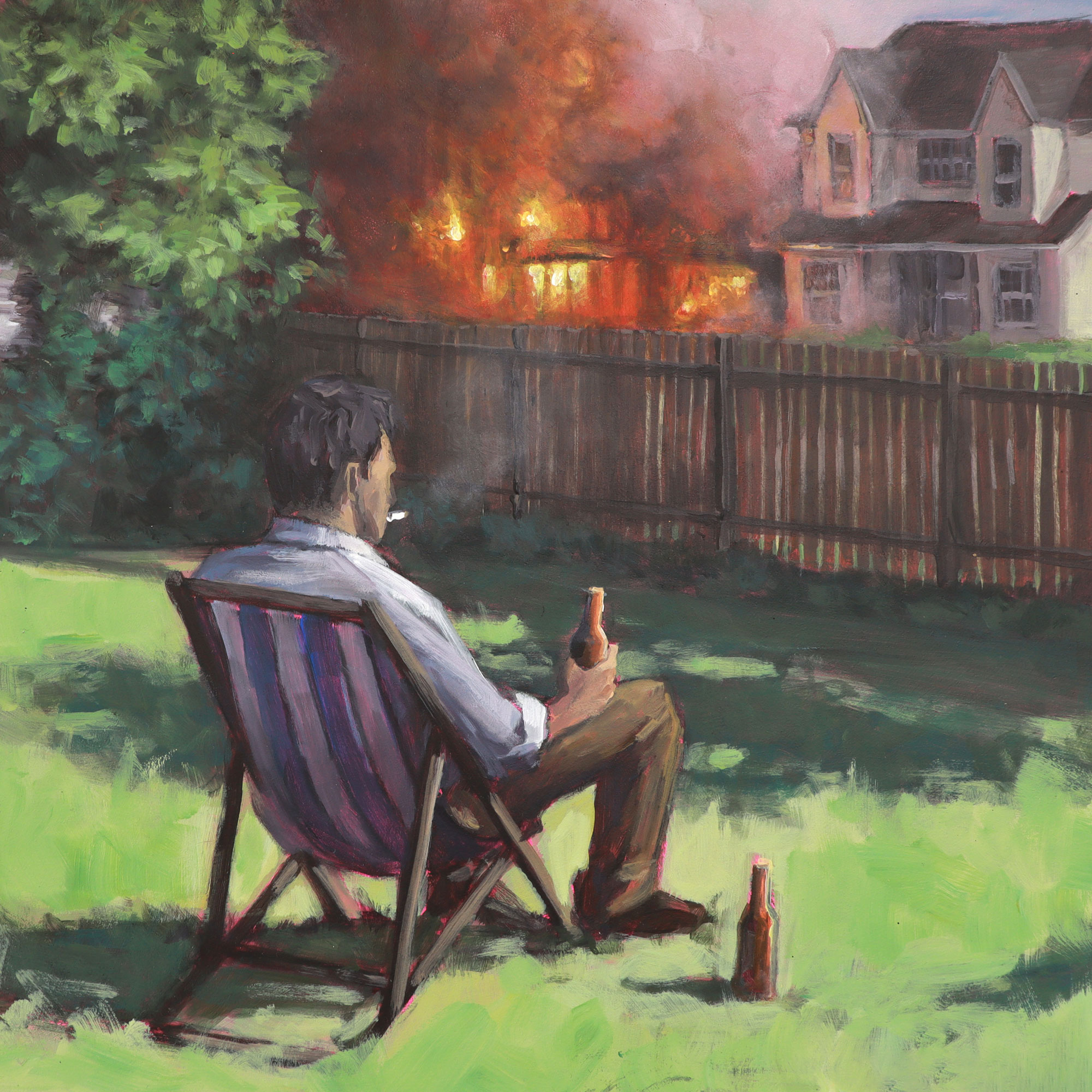
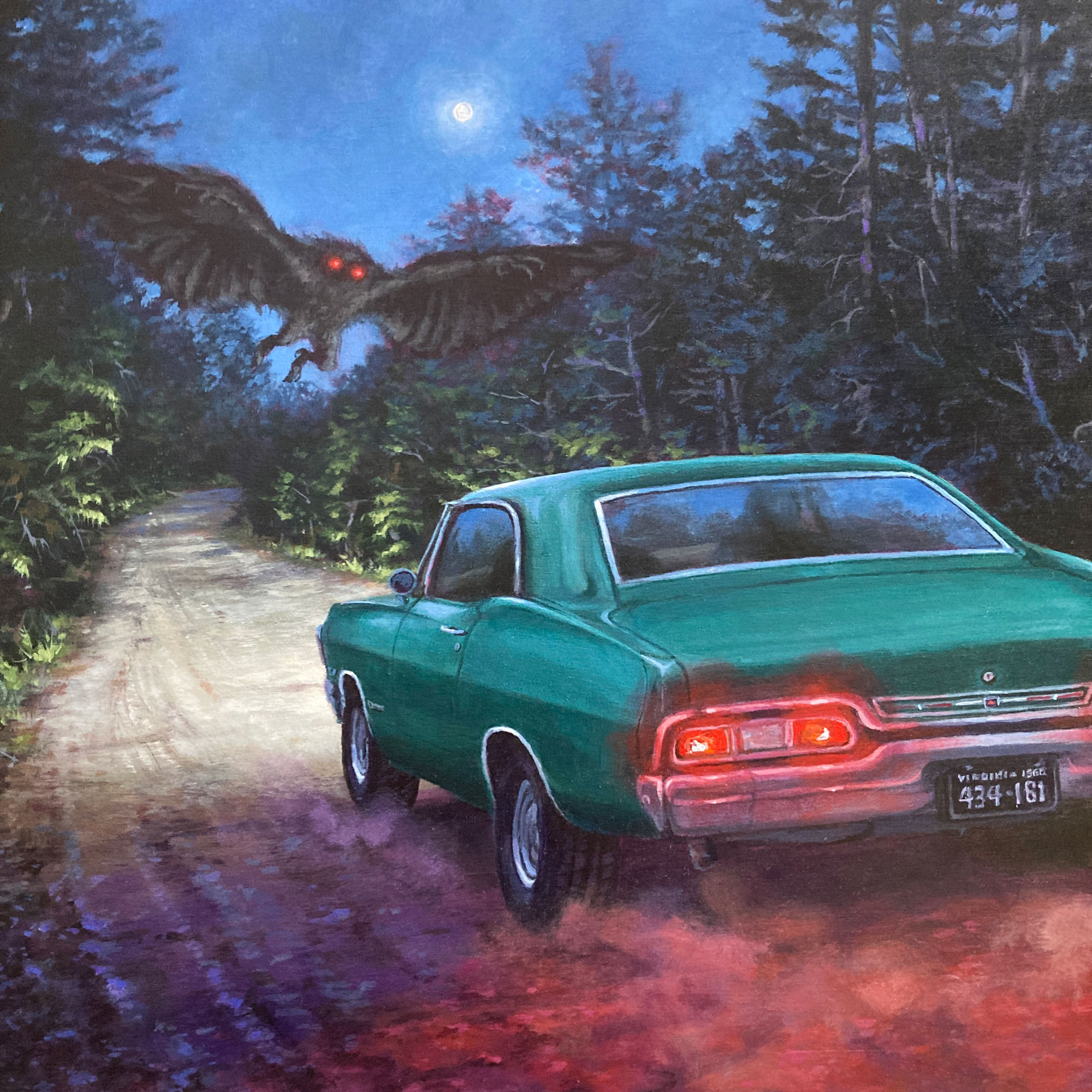
Wisconsin-based artist Pete Kornowski creates narrative-driven acrylic paintings blending folklore, strange encounters, cryptid creatures and believable realism. His work drops viewers directly into the middle of an unfolding moment, leaving intentional gaps for the imagination to piece together what just happened or what’s about to occur. Though Sasquatch and UFOs may be his subjects choice, his work runs deep, stoking questions about life as we know it on this plane of existence.
We had the chance to catch up with Pete to talk about his self-taught path, building atmospheric worlds, and the lore that drives his work.
Birdy: Pete, what is up, good sir? We love your work, your cryptids, your realism, your beautiful landscapes. We’re curious about where you grew up, if nature was always a part of your life and if art was too.
Pete Kornowski: I had a very happy, safe, pretty standard American childhood in Wisconsin. I was born in ‘81, so I grew up before what we’re experiencing now with screens and everything decided for kids. We were outside imagining, making up games and characters, and all of our toys had backstories to them. My brothers and I had a very creative mindset, and my mom and dad did as well. My dad would just make up bedtime stories. That right there is maybe one of the core things that still finds its way into my art — how I have made-up stories that are made into pictures. My mom was very good at drawing and was always into different crafts: basket weaving, watercolor painting, jewelry making and sewing. She was always making stuff, and that definitely rubbed off on me because I’m still like that now. Aside from my artmaking, I just like creating stuff, having an idea and bringing it to life. Art classes in school were always my standout subject where I could relax and thrive. I definitely stood out in my ability to draw and handle whatever teachers showed us. I always felt safe and comfortable in those classes. Art was always my identity — I was the art kid, the art guy.
Birdy: Art kind of chooses you. Some artists struggle with calling themselves an artist. Having that as part of your identity early on allowed you to nurture it, to own it.
Pete Kornowski: My wife and I talk about that a lot. She’s also an artist, and we define it as our superpower. Some kids are really good at sports and popular because of that — art was my superpower, and other kids knew me because I could draw. I’m not immune to self-doubt and I probably wasn’t even the best artist in my school, but it was something that made me feel good and I always got positive feedback for. Most kids are handed crayons and markers and they draw and scribble. I started that same way, but I just never stopped. In middle school I was drawing logos of my favorite teams and making my own football cards. As I got older, no one ever had to tell me to go practice — that’s just what I wanted to do with my time. I was naturally getting better at it incrementally because I was just all in. It’s still that way now. My mindset is different because I’m running a business to support my life and family, but if you stripped all that away and it wasn’t a job, I would still enjoy drawing, coming up with an idea and executing it. That’s still just part of who I am.
Birdy: Love that. It’s like with music. Someone can go to a Guitar Center and play all the riffs, but can they write a song? You have the talent to paint and ambition to learn, but you also tell a great story with your art. You have that in spades and it definitely stands out. How did you discover this aspect of storytelling, especially evolving as an illustrator into the painter you’re known for today.
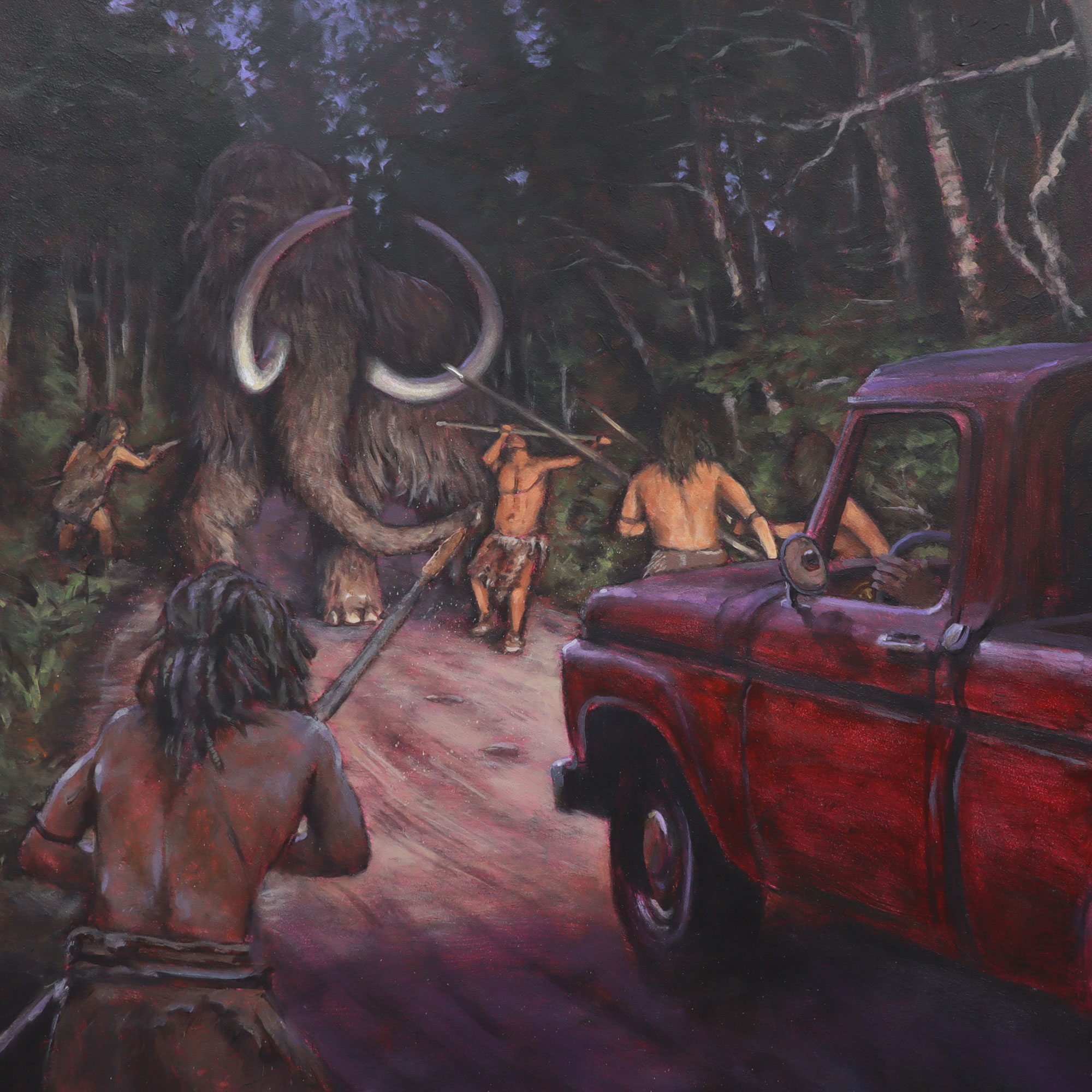
Pete Kornowski: For me, it started with picture-making, even from a really crude pencil sketch. As I got a little older, kids in school would ask me to draw specific people, or draw a scene that told a story. That’s how I think of my ideas now: What would be an absurd scene or situation, and how much of a story could I tell in a single flat image? How many things can I pack in there that fuel the imagination? I took every art class in high school, but I never painted much then. I got into painting later as an extension of bringing a drawing further to life with color, light, shadow, form and shape. It was a natural transition of taking a simple drawing and turning it into a more elaborate, colorful painting. One day I decided to paint, and next thing you know, that’s what I’m doing all day every day.
Birdy: That’s good living. Other than art classes, you didn’t go down the traditional school path.
Pete Kornowski: In high school, my art teacher was grooming me to go to Milwaukee Institute of Art & Design, the big art college in Wisconsin. I applied and was accepted, but at 17 or 18 I didn’t really want more school. I just wanted to start my life. I look back now and realize if I had been saddled with loans right from the jump, that would have screwed me over for years, even if I had a good art school experience. I came out completely debt-free, working and still making art, and eventually built my business. I had a bunch of other jobs that had nothing to do with art for almost 20 years while still making stuff that whole time. I’m self-taught in the sense that I was always doing it, always exposed to other people doing stuff, and learning along the way from my own interests. When people ask how we built our business, there isn’t a playbook. It’s taking opportunities as they arrive, making the best decision with what’s in front of you, making the thing you want to make, seeing how it works out in the world, and adjusting to whatever opportunities come with it.
Birdy: Do what you love and the rest will follow. When did you start getting into your paintings as they are now — with cryptid characters and the viewer seemingly walking into the middle of a scene?
Pete Kornowski: It comes from drawing scenes, combined with the mystery aspect, legends, lore and cryptids. Those things were always interesting to me as a kid. Back in sixth grade, in the early days of the internet, I built a Bigfoot page on a website called GeoCities with the few pictures that existed at the time and wrote dumb Bigfoot stories. My family would tell ghost stories camping, or my grandparents would tell legends and lore, and I just ate up those types of stories. Since most of that stuff isn’t something you can go outside and study or get a reference for, you have to imagine it. Coming up with my ideas is fun because you get to imagine what this would look like, and mix in a real story and reality so people relate to it, and then conjure up a “what if.” “What if” is the biggest theme of all my art: What would it look like if such and such happened?
Birdy: That absolutely comes through in your art. Though each piece has your personal stamp of imagination in it, your work is always seemingly open to the viewer to put their personal touch on it.
Pete Kornowski: I sell at art fairs primarily, interacting with customers directly, and seeing people’s reactions is so cool. It triggers or reminds them of something very personal, or means something completely different from what I could have ever intended. When you’re making stuff every day, sometimes you just make something because you treat it like a job and need to work. Then you show it to somebody and it makes that connection. The power of that fascinates me every time because I could never plan for it.
Birdy: You’re putting out good energy through what you’re doing, making a positive impact on people, which is pretty dope. But also staying true to your vision as an artist.
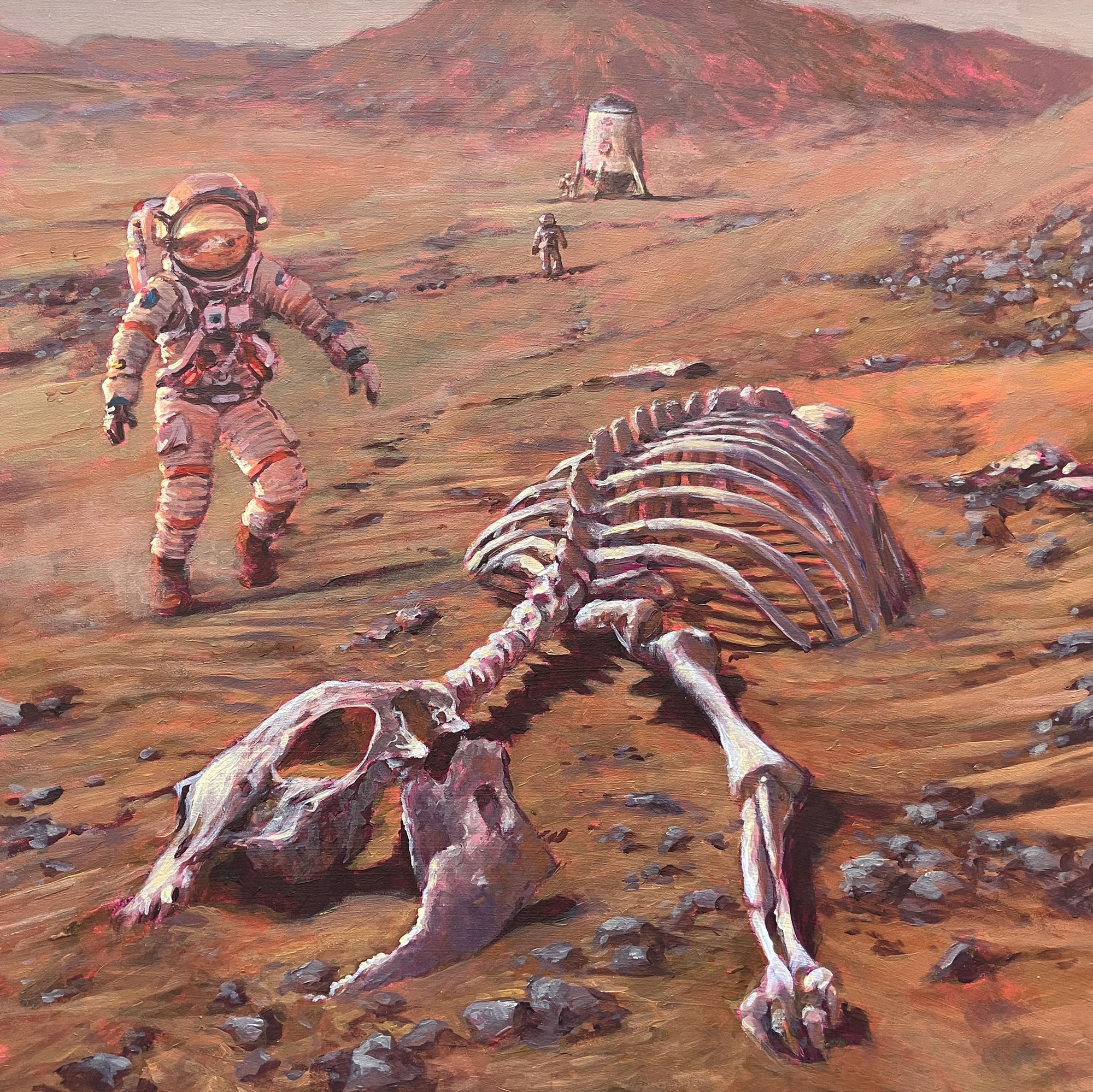
Pete Kornowski: Thanks. Some people come into my art fair booth and say, “I love your sense of humor,” or “That one really makes me laugh.” I’m not trying to make my art silly, goofy or comical. I want it to be like, “What would this really look like if …” But I also don’t want it to be scary. I don’t want real violence or anything brutally over the top in my paintings, but I want it to be a little bit shocking. Like what would that moment look like and feel like if you encountered this creature or saw this craft? I try to walk that line where it’s not silly, but it’s not scary — just believable.
Birdy: You capture that perfectly. And you create that mystery where the viewer has to use their imagination, which makes it interactive.
Pete Kornowski: When you can tap into the viewer’s own imagination, it saves you the trouble of having to explain it all. Whether it’s a written story or what I try to do in my images — you don’t have to explain everything. You get to use the viewer’s imagination as one of your tools in the painting. People ask me all the time in my booth, “What is happening?” or “Where is this from?” And I say, “That’s for you to answer. My job is done. I made the picture, now you get to tell the story.” That keeps the painting alive forever. There could be a whole backstory, a future, and it can intertwine with other images. I love the open-endedness of it because that’s how I see life. I don’t have all the answers, and I don’t want to know all the answers.
Birdy: You’re speaking our language. Being a full-time artist how do you stay disciplined with making art? What’s a day-in-the-life of Pete Kornowski like?
Pete Kornowski: Staying motivated for me is easy because for a long time I had a non-art job. Every day I thought, Man, if I could just do something else. It wasn’t the hardest job, but I knew I wasn’t using my superpower. Now, any moment I feel like I don’t want to fulfill a print order or don’t feel like painting, I remind myself, Dude, you could be plunging a toilet right now at your last job.
As for the practicality of a real day, we get up, have breakfast and I usually have a plan set up from the day before. Leave something to start on from the previous day — whether it’s a painting, initial drawings, or printing and packaging wholesale orders. Once I start working, it leads me into the next thing to do.
We’ve created a flexible lifestyle mixing in time with my wife, our daughter, and family stuff around our property. But I start the day by working, trying to do at least five or six hours on something each day, sometimes much more. My mentality is to treat it like a workday: show up and get something done. At the end of the day, it’s a fun, creative small business filled with Bigfoot and UFOs. But it is a business. Like an electrician, I still have to find customers, fulfill orders, pay taxes, order supplies. I remind myself it wasn’t always like this. So if I can’t enjoy this, what else am I going to do?
Birdy: When you’re self-employed, it’s not a linear path, and it’s certainly not easy. But you have to have gratitude for the fact that we get to deal with art and creatures and fun.
Pete Kornowski: It’s gotten easier for me over the years. Early on, being self-employed felt really fragile, thinking a month ahead at a time and worrying where the next job was coming from. But after 10 years of doing it, you realize you always figure it out and things build up to get stronger and more stable. I do feel pressure from time to time to come up with new ideas that are as cool or better than what I just did. I go through waves of feeling confident and then feeling like I want to throw it all away, before waking up the next day realizing what an awesome life I have.
Birdy: You definitely have it covered. You come up with new art all the time that blows people away.
Pete Kornowski: Thanks, man. People ask where I get my ideas, and I say I just follow my own general interest in legends and lore. But really, I have so many ideas there’s not enough time to do them all. The real problem is picking which one is going to be the strongest so I don’t waste the day. I get waves of inspiration where I want to go in a totally different direction, and that channel is always on. Ideas are just always there.
Birdy: How do you exist in this digital, high-information world as an analog artist, especially with things like AI advancing at lightning speed?
Pete Kornowski: I grew up seeing the whole evolution of the internet, so I lived a life without it and saw how people really interacted. The idea of making something with a human touch that stays alive and gets passed around, I just stayed in the momentum of my own creativity and never worried about it too much. When I sell to people in person, they calm down. They sit and stare at a painting for a few minutes, the wheels turn in their mind, and they ask a question or share a story. People still have that connection to a real piece of art, especially when the artist is standing there and they can see the artist’s hand in the thing that was made. They’re getting a little piece of you. I think that is still alive and well despite technology. As for tools like AI or digital art, it’s just like when photography or printing came along. Painters panicked, but people can tell the difference and want the real thing. AI is cool for solving problems and creating shortcuts, like a power tool for a carpenter. Art is the constant, and these technologies are just little satellites around the outside. A handmade thing or a live performance made with someone’s own hands doesn’t change, and you can’t really replace that.
Birdy: They both can exist. But the human will always win with art.
Pete Kornowski: I have conversations with artists about this who worry it’s going to ruin business, but there are billions of people on the planet. Even if AI becomes popular, there are still going to be hundreds of thousands of people who want to buy paintings from you, and you’re going to be fine. That world is so fake too. Real people are feeding content into it, but it’s really easy to just look away from the screen. I know they’re designed to addict and people use them for business and entertainment, but it’s pretty easy to check out and go do something that doesn’t involve a screen. Get out a piece of paper and write something down, draw a picture, go outside and play with your kids, or make up a game. All the old ways of entertainment are still there. They didn’t go anywhere. So I don’t fear technology or AI in relation to my art business. I don’t feel it pressuring me to do anything or to not do anything. I’m just going forward with what I want to do no matter what.
Birdy: Speaking of tuning out the visual noise of the screen, do you listen to music or podcasts when you’re working, or do you paint in silence?
Pete Kornowski: I have my go-to podcasts and radio programs, like Sasquatch Chronicles. Every once in a while I’ll throw on a movie in the background. I usually have something going on — painting UFOs in my basement in complete silence would make me feel like a psychopath.
Birdy: Do you only work in acrylic?
Pete Kornowski: Yeah, I own tons of other kinds of paint, but most of my techniques and process I’ve learned over the years are with acrylic. When I decided I was going to paint more, there just happened to be acrylic paint in the house, so that’s what I used and learned from there. For the way I like to make a painting, acrylic works great for me. I can finish something, hang it on the wall, and sell it the same day.
Birdy: Okay, top favorite cryptids, creatures, monsters?
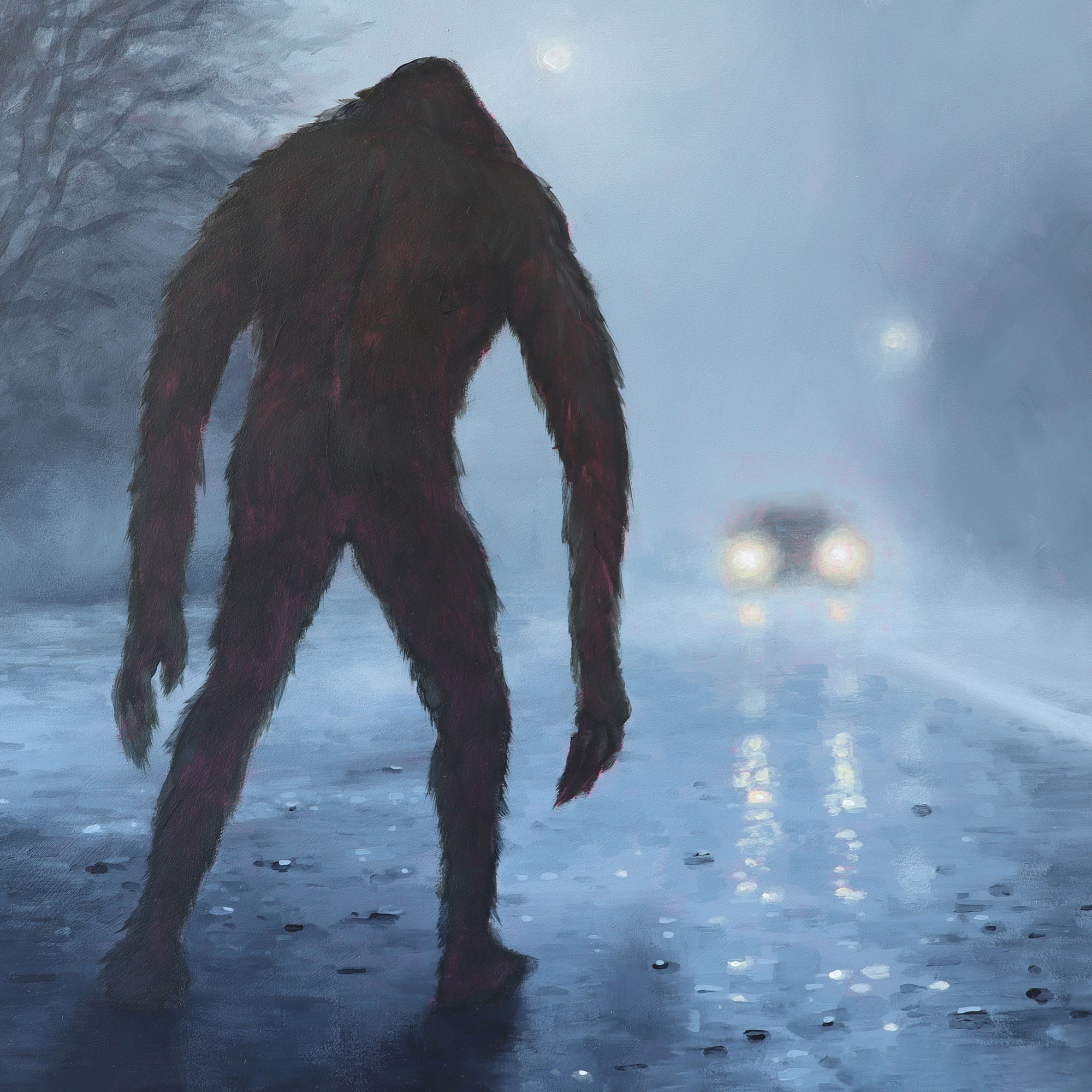
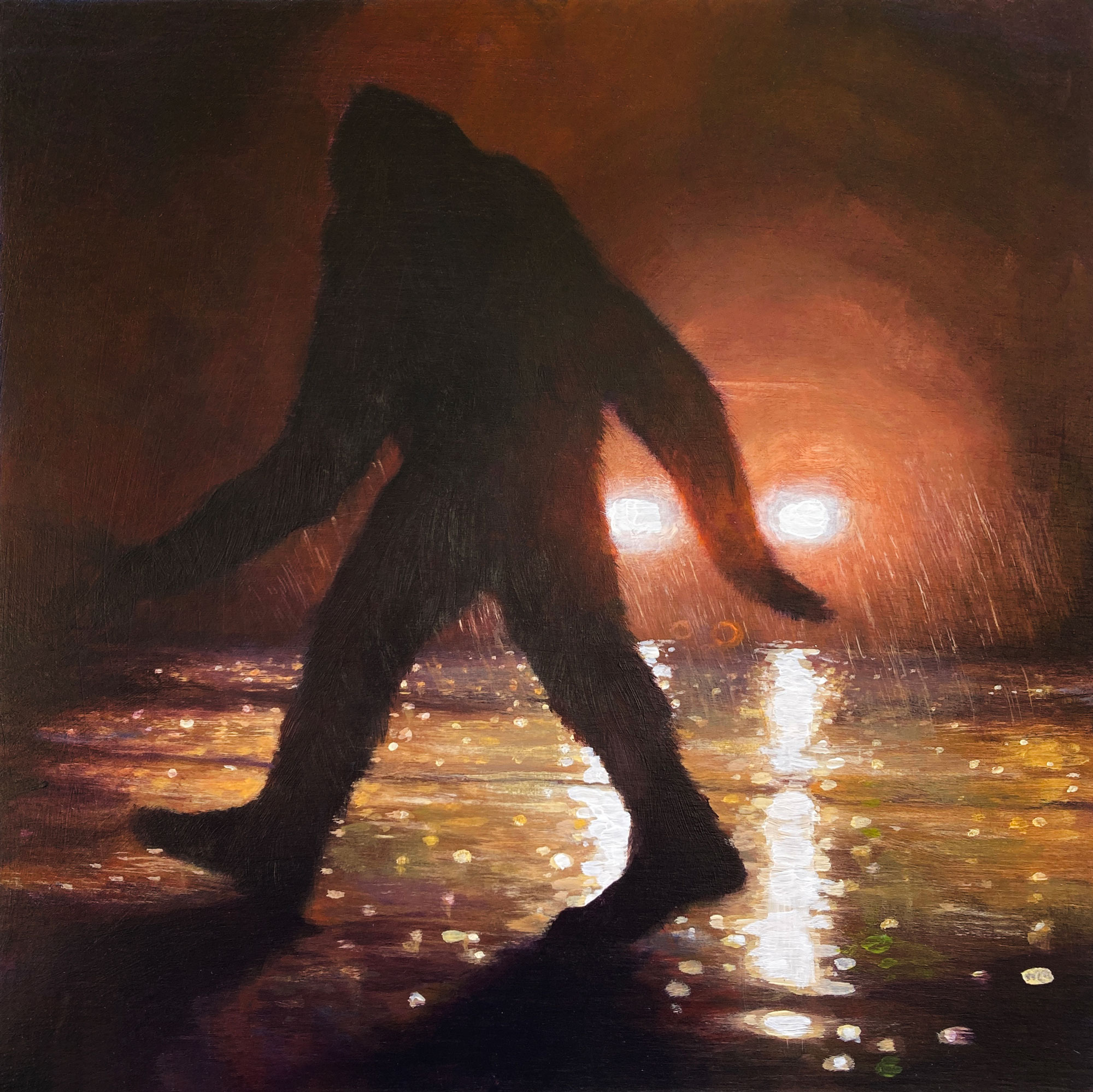
Pete Kornowski: Oh, Bigfoot all the way. I always loved the “what if” aspect of it. When I was a kid, I used to go up to my grandparents’ house in northern Wisconsin, dropped in a national forest in the middle of nowhere. I’d run around in the woods and my grandpa would say, “Watch out for black bears or cougars.” My imagination was always painting a picture: What if you walked around the corner of the trail and saw a bear, or saw a creature? Even driving at night, coming over a hill and seeing headlights catch something on the road. There’s that excitement of crossing paths with a creature in that moment. Bigfoot, to me, seems the most plausible. I’m not adamant that I’ve seen it or experienced it, but I love the idea, the stories and the legend of it. People tell me so many cool Bigfoot, UFO and paranormal stories in my booth when they see my artwork, and some end up as painting ideas. So Bigfoot and then Dogman. Those are my top choices. What about you guys?
Birdy: Bigfoot is definitely our hero. Jaws, Godzilla, Yeti — no wait, Bumble. Anyway, you’re so great at what you do Pete. We really appreciate your art and it’s an honor to have you be a part of Birdy.
Pete Kornowski: Thank you both from the beginning for just including me. You know, I didn’t know what to expect when I submitted some things, but the artists that you guys have involved — to have my name alongside them and in the same circle is pretty freaking cool, from my humble situation of just drawing my fun pictures in my basement.
Birdy: We think they’re all lucky to be seen with your art. It’s all about community. Leaning on each other for support and inspiration. So really the honor is ours.
Pete Kornowski: Thanks. We’ll, I’m not going anywhere, and I’ll keep making my art.
PETE KORNOWSKI: SOLO EXHIBITION
Opening Reception January 15, 2027: 5PM
Exhibition on view through February 26, 2027
Plymouth Arts Center | Wisconsin
See more of Pete’s work: Instagram | Website
Check out Birdy’s Explore section to see his past published pieces.
Krysti Joméi is the co-owner and co-founder of Birdy Magazine. Creating in Colorado for the past decade plus, she’s lived all around San Francisco, by Houston’s NASA, on an island across from Seattle, near the WA/Canadian border, and under the Nandi Hills in Kenya. She loves outer space, the ocean, running in nature, anything written by Trent Reznor, and adventuring with her husky-malamute and black cat.
Jonny DeStefano is the co-owner and co-founder of Birdy Magazine. He is also the founder of the comedy activist space Deer Pile. His favorite color is red, he loves shark attacks, hockey and upright bass.