
When The Wistful Are Forgiven
By Brian Polk
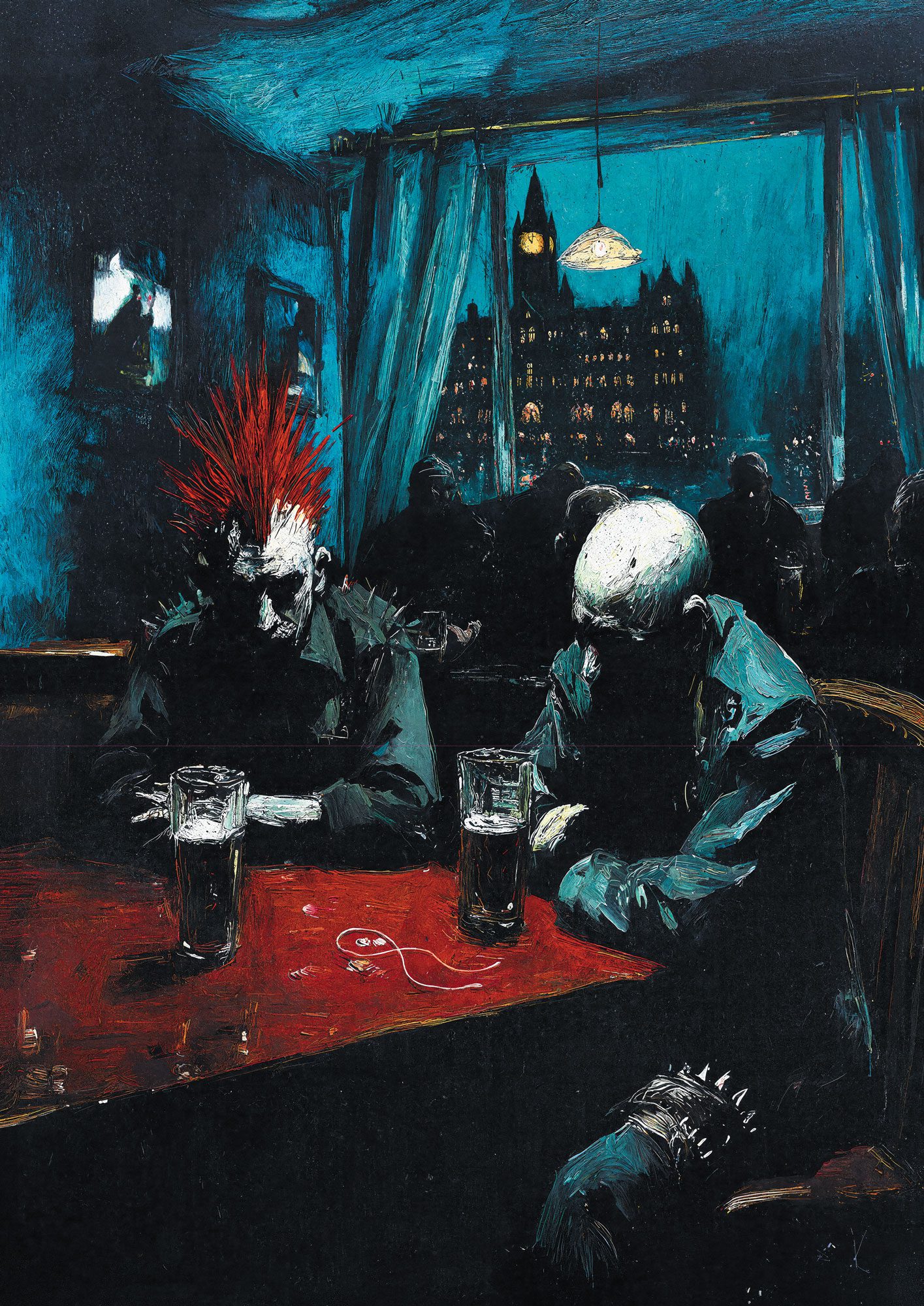
Art by Hari Ren
Published Issue 144, December 2025
A Wistful Letter To The People We Used To Be
There are still a few leaves defiantly clinging to the maple tree in our old front yard. I love watching them flutter in the cold winter breeze. I can’t help but admire the figurative middle finger these leaves have for their own destiny. They’re not just summer leaves — no, this particular foliage is not going to let the seasons define who it is as vegetation. They’ll probably hang on all winter. And sure, it may seem like an exercise in futility to hold onto something like that long after the writing on the wall spells out the inevitable. But I get it. Big changes in life almost always happen before we’re ready. It reminds me of us — or at least the people we used to be. One day we were vibrant, green leaves soaking up the summer sun, just content to be in each other’s presence. Then the seasons changed, just like they always do, and we had no choice but to accept our fate. I’m not clinging to that tree anymore, and neither are you. We let go and tumbled violently in the wind before we found a precarious place to land. And we’ve been around long enough to know we’re not safe here, either — that at any moment the weather could change and send us back to careen blindly through the world. But that hasn’t stopped us from moving on, of course. As a wise man once said, “So it goes.” There’s a lot I’d like to tell you these days. Sometimes I wish I could work up the nerve to call, but I always stop myself — mainly because I wouldn’t be talking to the old you, just like you wouldn’t be talking to the old me. We’d just be two new strangers who don’t have that much in common, awkward in silence, because we can’t think of anything to say. I guess that’s why you haven’t heard from me in a while. Sometimes I wonder if there’s a parallel universe where the old versions of ourselves still live. Where they didn’t grow so far apart. Where they’re just leaves on that tree. And I wonder if they’re still happy.
It’s Okay To Forgive Yourself
I spent a lot of time cringing at certain events of my past. While I know this is a pretty universal experience, I had been torturing myself over it. In fact, it became such an issue that I started looking people up online and sending them messages of apology. Almost everyone I contacted replied by saying they didn’t even remember the incident in question, so no apology was required. And while unburdening yourself like that is actually quite freeing, the returns diminish pretty substantially after a while. In truth, the positive sentiments came to a screeching halt when one of the apologies did not reply to me specifically. Instead he posted on social media that he didn’t want anyone to DM him, because he didn’t want to talk about the past. Fair enough, I suppose. But I’d be lying if I said it didn’t hurt my feelings a bit. Anyway, about a year later, I would still torment myself about former occurrences from time to time. Then one day I had a thought: What if I stopped trying to find external validation for events that have already happened? What if I forced myself to have an internal breakthrough? Couldn’t I just get to the root of the problem and forgive myself for the petty indiscretions my younger self committed? Aren’t I just overemphasizing forgettable instances in order to intensify my insecurities at the expense of my own inner peace and self-actualization? And if so, why am I doing that? Once I had this discussion with myself, I let a lot of things go. I also realized I was just a kid when I acted the way I did. Today if I were faced with identical situations, I wouldn’t behave that way. And of course that means I’ve learned from my mistakes, which means I no longer have to obsess over them. This clears my brain for more important thoughts, like, How can I be more present for the people I care about now? And that is something I very much enjoy thinking about.
Brian Polk is a Denver-based writer, author and drummer for Elegant Everyone and Joy Subtraction. He’s the author of Placement of Character and Turning Failure into Ideology. He likes writing, muck raking, yellow journalism, zines not blogs, cheap booze and punk rock.
Hari Ren is a working-class artist from the North of England, shaped by the industrial weight of Manchester, punk spirit, and the half-buried folklore of forgotten towns. His work draws on crumbling council estates, soot-blackened mills, and those pushed to the edges of society, blending myth, memory, and raw emotion into something vivid, jagged, and real. He creates art that’s unpolished and unafraid, born from the backstreets, the misted moors, and the strange beauty in places most overlook. Influenced by punk, folklore, and DIY culture, Hari’s work blends eerie storytelling with social grit, where the ghosts of the working class still rattle through viaducts and half-demolished terraces. Recurring themes include defiance, decay, and survival, whether it’s a black-eyed cat watching from a rainpipe, a tribe of feral orphans in the bogs, or a brutalist tower humming with strange machinery. His projects often spill across formats, from paintings and zines to installations and short animation.
See more work: Website | Instagram | Facebook | Bluesky | TikTok
Check out Brian’s November install, It’s Beginning To Look A Lot Like, or head to our Explore section to see more of his past work. This is Hari’s debut with Birdy, but keep your eyes peeled for more by this incredibly talented artist.
Pingback: What I've Learned From The Fine People of TV by Brian Polk - BIRDY MAGAZINE